Forecasts now run from a December hike to no change at all until the end of 2027
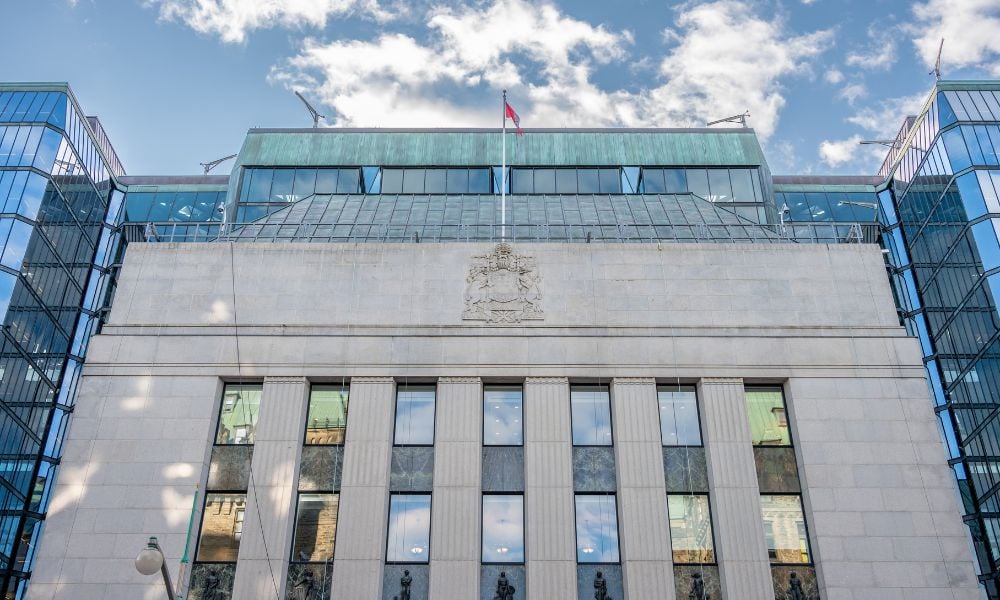
Forecasts for the Bank of Canada's next policy move now stretch from a quarter-point increase in December to no change until the end of 2027.
Governor Tiff Macklem said the bank would act if price pressures persist, speaking at his September 2 press conference hours after the hold at 2.25 percent for a seventh straight decision.
"Certainly if we felt that inflation was going to remain too high, yes, we are prepared to raise interest rates," he told reporters, according to Reuters. "And if it takes more than one increase, we're prepared to do that."
Reuters reported money markets responded by pricing a 25-basis-point increase by December and roughly three further quarter-point hikes next year.
"The Bank of Canada delivered a more hawkish message today," chief North America economist Stephen Brown wrote in a note quoted by Reuters.
Brown said Capital Economics would pull forward a first-hike forecast then set for the second quarter of 2027.
The Financial Post reported the firm has since shifted that call to December.
Before acting, policymakers will likely want further improvement in unemployment or growth, Brown told The Canadian Press.
CBC News quoted a research note from Derek Holt, vice-president and head of capital markets economics, saying the Bank of Canada left itself room to tighten "as soon as the next meeting if everything co-operates."
Holt pointed to the inflation, jobs, and GDP data due before October 28.
He predicts 75 basis points of increases starting in the fourth quarter of 2026.
Per the Financial Post, Scotiabank's house call sits at 2.75 percent by year-end and 3 percent in 2027.
Market pricing that peaks at 3 percent is "excessive," managing director and head of macro strategy Royce Mendes told the Financial Post, though he still expects 50 basis points of increases in the first half of 2027.
On the US-Canada trade war, Mendes said policymakers offered "only a lukewarm assessment of the prospects for monetary easing."
Rate cuts would likely require "severe economic stress," he added.
Rosenberg Research & Associates Inc. president David Rosenberg wrote in a note quoted by the Financial Post that the statement gave doves plenty to work with.
He pointed to the absence of spillover beyond fuel prices, the temporary factors behind second-quarter strength, and soft labour demand, which he said "seals the deal for a stand-pat policy stance, but with a bias more to ease than tighten down the road."
CIBC chief economist Avery Shenfeld sees little prospect of a move in either direction in 2026.
Trade uncertainty "clouds that picture too much to be definitive about what lies ahead," he wrote in a research note quoted by CBC News.
TD economist Marc Ercolao said stronger-than-expected second-quarter GDP cut the case for easing, while contained underlying pressures left "little justification for rate hikes," in commentary published by TD Stories.
TD expects a hold through the remainder of the year.
Macklem "put a stake in the ground" on inflation risk, RBC chief economist Frances Donald told The Canadian Press, pushing back against analyst expectations that the messaging would centre on growth.
Donald said markets tend to read central banks as binary, hawkish or dovish, hiking or cutting.
What stood out to her was "how governor Macklem was prioritizing the multiple risks in play."
She added that rising bond yields already deliver part of the tightening a policy move would achieve, since the five-year Government of Canada yield feeds commercial lending rates and fixed-rate mortgages.
That yield hit its highest point in more than two years on September 2.
Ninepoint's Etienne Bordeleau-Labrecque, in commentary sent to Wealth Professional, called the bank's assessment of the tariff hit "pretty sanguine" and argued the statement and remarks "seem to skew hawkish, when they should probably read more neutral."
He set out the trade-off directly: "Talk hawkish, do nothing, maintain credibility. We view this as the path of least resistance."
His base case has the output gap closing in late 2026 or early 2027, opening room to move toward 3 percent against a neutral range he puts at 2.25 percent to 3.25 percent.
Andrew DiCapua, principal economist at the Business Data Lab and the Canadian Chamber of Commerce, told Wealth Professional the hold is "the safest course of action right now," adding that "the Bank is not fighting the same inflation battle as some other central banks."
A firmer outlook has pulled hikes forward on the calendar, he said, but rates are unlikely to move higher this year.
NerdWallet Canada mortgage and finance expert Clay Jarvis puts the near-term risk in fixed rates rather than variable, which he expects to keep hovering around 3.4 percent.
"Bond yields aren't much higher than they were a month ago, but it won't take much of an upward swing before lenders start hiking their fixed rates in response," Jarvis told Wealth Professional.
Reuters reported the Canadian dollar traded 0.12 percent higher at 72.07 US cents, or $1.3876 to the US dollar, with two-year Government of Canada yields up 1.6 basis points to 2.745 percent.