Strong Q2 growth of 3.3% and broad economic gains leave the Bank of Canada on hold, even as trade war risks cloud the third quarter
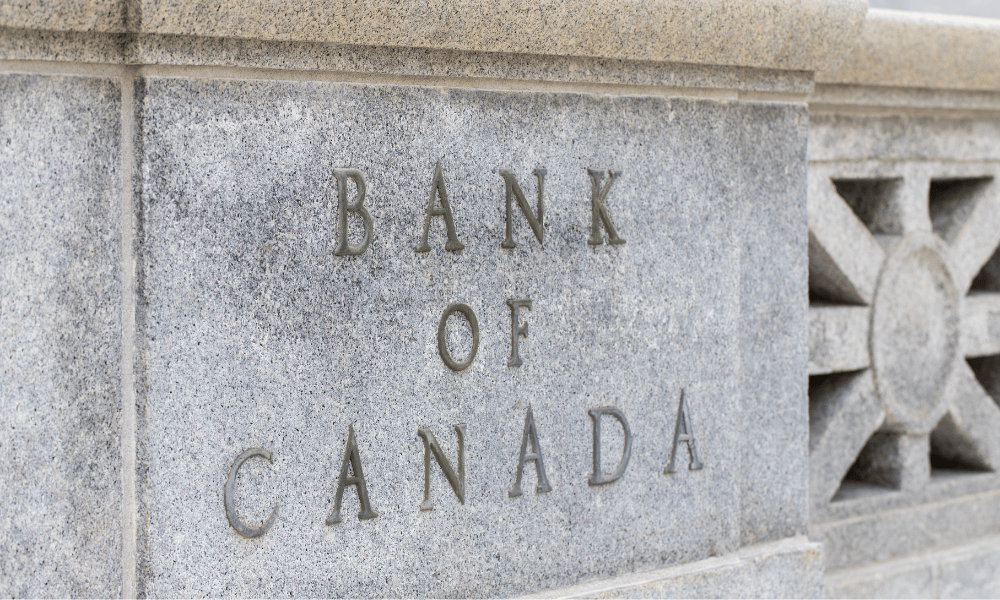
Canada's economy posted its strongest quarterly growth in two years heading into Wednesday's Bank of Canada rate decision, but economists say the central bank is unlikely to lower borrowing costs…at least not yet.
Statistics Canada reported last week that gross domestic product expanded at an annualised rate of 3.3 per cent in the second quarter of 2026, with gains recorded across nearly 90 per cent of the economy.
The breadth of the rebound came as a relief after a technical recession in Q1, and it has significantly reduced the pressure on the Bank of Canada to act at its September 2 announcement.
"The second quarter was encouraging not only because growth reached an annualized rate of 3.3 per cent, but because it extended across nearly all of the economy," said David-Alexandre Brassard, chief economist at CPA Canada. "Manufacturing activities in June also reached their highest level since tariffs were introduced in March 2025. Canada enters the next phase of trade uncertainty on stronger footing."
The Bank of Canada has held its overnight rate at 2.25 per cent since October 2025, when it trimmed borrowing costs from 2.50 per cent.
The rate has remained unchanged through five consecutive decisions as policymakers have weighed persistent inflation, which climbed to three per cent in July, according to Statistics Canada, against the threat of an escalating trade conflict with the United States.
GDP per capita grew by more than one per cent in the second quarter, its strongest showing since 2021.
However, economists caution that some of the forces behind the headline number may prove temporary. Higher oil prices and a modest easing of effective US tariffs helped lift the results, and neither condition is guaranteed to hold.
"This is genuine resilience, but not immunity from a trade war," Brassard said. "Canada remains closely tied to the US economy, with much of its recent export diversification driven by higher commodity prices. We should recognise the progress without underestimating the downside risks facing the third quarter."
What does this mean for the BoC on Wednesday?
Governor Tiff Macklem and Senior Deputy Governor Carolyn Rogers face reporters at 10:30 a.m. Eastern on Wednesday following the 9:45 a.m. rate announcement.
The strong GDP print has reinforced existing expectations that the central bank will hold steady, even as trade tensions mount and uncertainty over US tariff policy remains elevated.
The competing pressures of inflation above target and a trade war that threatens to slow growth, have put the BoC in a difficult position. As economists have noted in recent weeks, the central bank cannot easily address both risks at once.
A rate cut could stimulate an already-rebounding economy and stoke inflation further; holding preserves flexibility to respond if conditions deteriorate in Q3.
Analysts at Canada’s big banks have flagged the September meeting as a likely hold, noting that the favourable inflation trajectory gives the Bank room to act later if trade-related economic damage becomes clearer. For now, the stronger-than-expected GDP data has taken an emergency cut off the table entirely.
Trade war risks haven't faded
Despite the upbeat second-quarter numbers, the outlook for the months ahead remains uncertain.
The US administration has continued to propose new tariffs, and the full effect of trade disruptions on Canadian exporters and supply chains is still working through the data.
The path ahead for interest rates will depend heavily on how trade tensions evolve in the coming months.
Brassard's comments point to a central tension in the Canadian economic story: the second quarter showed genuine strength, but it was partly built on conditions (elevated commodity prices and temporarily lower tariff exposure) that could reverse.
The BoC's communications on Wednesday may matter as much as the rate decision itself. Any signal about the central bank's tolerance for further weakness, or willingness to cut if Q3 data disappoints, will shape the fixed income and currency outlook for the rest of the year.