The countries' two finance chiefs meet in North Carolina in the first senior contact since talks collapsed
Finance minister François-Philippe Champagne meets US treasury secretary Scott Bessent in Asheville, North Carolina, this week, 10 days after trade negotiations between Canada and the United States broke down.
Champagne's spokesperson John Fragos confirmed the meeting in a media statement Monday, The Canadian Press reported, with the outlet describing it as believed to be the first face-to-face contact between high-ranking Canadian and US officials since the collapse.
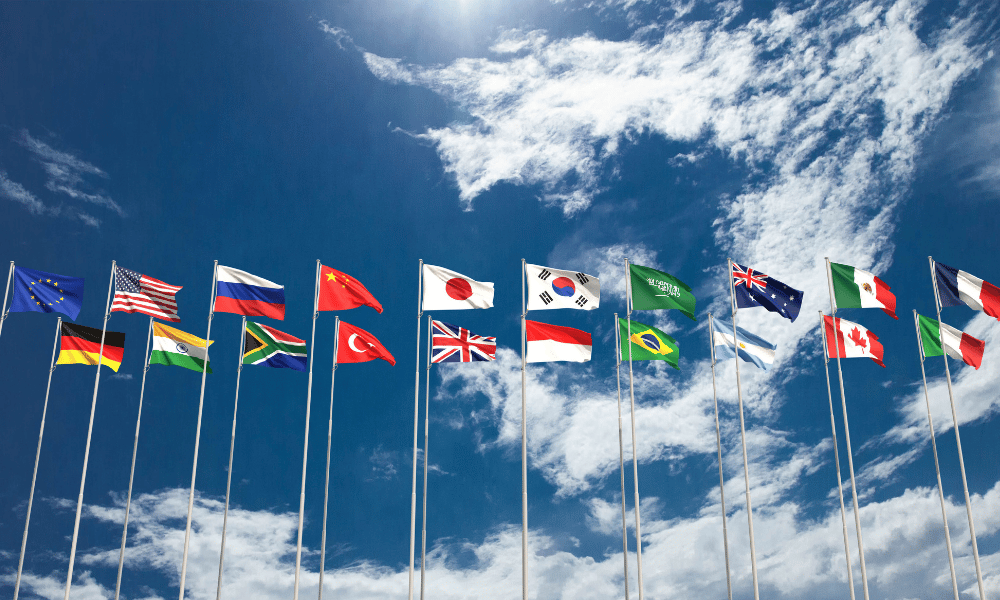
Champagne is in Asheville from August 31 to September 1 with G20 finance ministers, and Bank of Canada governor Tiff Macklem is also attending.
Washington imposed 50 percent tariffs on $28bn worth of Canadian goods starting August 22, according to The Canadian Press.
US outlets put the same tranche at roughly US$20bn.
Canada's counter-tariffs take effect September 8 and cover about US$20bn a year of American imports, the New York Times reported, matching the value of the Canadian exports caught by the US measures.
Prime minister Mark Carney said the Canadian duties will target steel, dairy, agricultural equipment, and pulp and paper, among other sectors, CNBC reported, and he told a press conference in Ottawa that US negotiators “They asked too much and offered too little.”
Bessent used a CNBC appearance Monday to confirm the bilateral and to dismiss the idea of a tit-for-tat fight, telling host Sara Eisen that Canada cannot trade blows with an economy “13 times larger than you are,” as carried by CBC News.
He said Carney had turned the dispute into a political shouting match, and asked whether Canada would deploy “their two submarines from the Edmonton mall,” per The Canadian Press.
Bessent also said Canada had been offered the best trade deal available to any country and walked away at the last minute.
The West Edmonton Mall submarine ride closed in 2005 and the vessels were scrapped in 2012, CBC News reported.
Fragos said Canada left the table after the United States introduced unfair and uneconomic terms, and that Champagne will press what Canada can offer G20 partners in critical minerals, energy, and potash.
Speaking to the New York Times, he said “Canada increasingly has what the world wants and needs.”
The Department of Finance said Champagne will also join a G7 finance ministers and central bank governors meeting on the margins, and hold bilaterals intended to advance trade diversification, strengthen strategic partnerships, and “attract new investment opportunities to Canada.”
The department listed the global economy, sovereign debt architecture, and financial literacy as agenda items ahead of the G20 leaders' summit in Miami on December 14 and 15.
Royce Mendes, head of macro strategy at Desjardins, said in a note carried by the Globe and Mail that the escalation will be “difficult for the Bank of Canada to navigate,” arguing that counter-tariffs and elevated oil prices leave policymakers reluctant to add stimulus even as growth takes a hit.
Sébastien Mc Mahon, chief economist at iA Financial Group, said the loonie is among the most shorted major currencies, “leaving much less room for further downside,” in comments reported by BNN Bloomberg.
The same report put the Canadian dollar at 72.24 cents US on August 24, down from 72.67 cents US the previous session, with the S&P/TSX composite index closing up 93.89 points at 36,714.12.
MUFG forecasts the Canadian dollar sliding to $1.41 per US dollar in the third quarter, with Derek Halpenny, head of research, global markets EMEA, saying Carney's dollar-for-dollar pledge adds risk to investor confidence, according to Bloomberg.
Canadian economist Trevor Tombe estimates sustained 50 percent US tariffs could cost around 90,000 jobs, CNBC reported.