Economists have already cut the growth forecast, and the target list is still to come
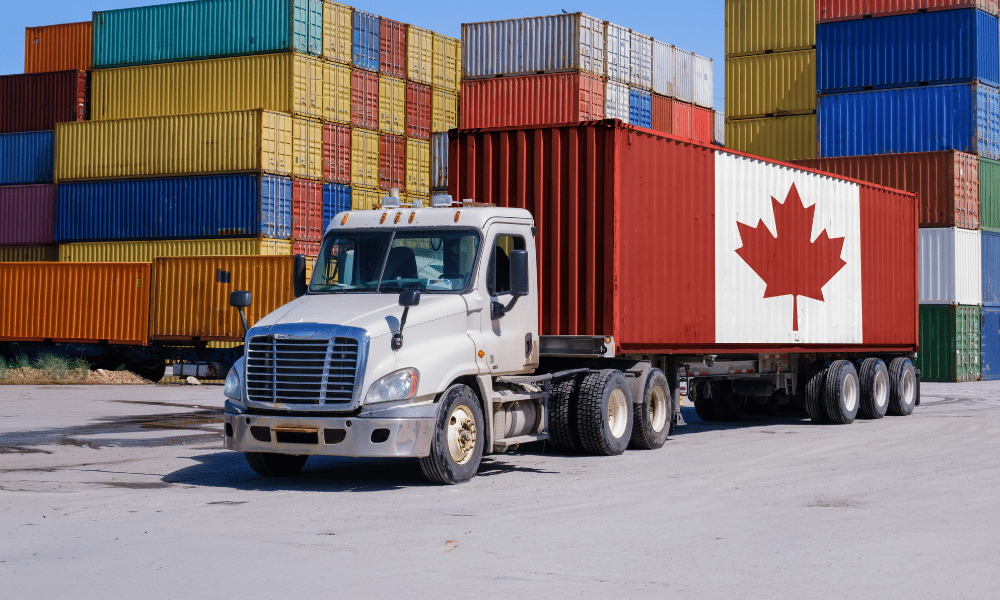
Canada reveals which US products will face its counter-tariffs on Tuesday, the last missing piece of a retaliation package that takes effect on September 8.
Finance Minister François-Philippe Champagne, Industry Minister Mélanie Joly, Jobs Minister Patty Hajdu, and Artificial Intelligence Minister Evan Solomon will hold a joint press conference to announce measures to protect and support Canadian workers and businesses, according to the Department of Finance.
Two sources told CBC News the targeted products will be diverse and have readily available Canadian alternatives, while CTV News reported the package will include an expansion of employment insurance.
Fifty percent US tariffs on about $28bn worth of Canadian goods took effect early on Saturday, as per CBC News, after three days of negotiations collapsed.
Reuters put the value of the affected exports at US$20bn, none of it exempted by the Canada-United States-Mexico Agreement (CUSMA).
Trump had paused the same duties less than two hours before they were first due to land, according to a previous report by Wealth Professional.
TD Economics estimates the new US tariffs could shave 0.3 to 0.6 percentage points from gross domestic product (GDP) growth over the next year, with Canada's counter-tariffs subtracting another 0.1 percentage points assuming a 50 percent rate.
Growth is now likely to come in closer to the mid-1s percent by the end of 2027 on a fourth-quarter-over-fourth-quarter basis, rather than an earlier estimate of close to two percent, wrote Andrew Hencic, director and senior economist, in an August 24 commentary.
Inflation enters from a contained starting point.
The Bank of Canada's core measures averaged 2.0 percent year on year in July and the classic measure excluding food and energy came in at 1.9 percent, against US core CPI of 2.5 percent.
Earlier central bank analysis found roughly a quarter of new tariffs passed through to consumer prices, lifting CPI by 0.3 percentage points, though those measures covered about $60bn of goods against roughly $28bn now.
Two-year Canadian yields fell 10 basis points, TD said.
"The size of the tariffs is likely not large enough to derail Canada's economic growth backdrop," RBC Economics said in an August 22 analysis, putting the Canadian value-added content of the newly tariffed goods at roughly 0.4 percent of GDP and jobs, with more than 80 percent of exports still crossing duty free under CUSMA.
Canada's average effective tariff rate mechanically rises to around six percent from around three percent, still below the roughly seven percent the US applies to imports from all countries, the bank said.
Canada imported about US$23bn of the products on the new tariff list from the US in 2025 against about US$20bn of exports, according to RBC, giving trade flows more scope than usual to reorient within North America.
The bank does not expect the macroeconomic impact to push the Bank of Canada toward rate cuts, and said softer underlying inflation has raised the likelihood the central bank will not hike this year.
Roughly 87,000 Canadian jobs could be at risk, with about 52,000 directly exposed and another 35,000 through suppliers, according to an analysis by University of Calgary economics professor Trevor Tombe reported by CTV News.
Ontario carries 36,100 of those, Quebec 18,300, and British Columbia 11,200, with machinery, electronics, plastics, and rubber most exposed.
Trump threatened on Monday to raise tariffs on all Canadian cars, trucks, and automotive parts to 50 percent from January 1, 2027, Reuters reported.
Shares of Ford and Stellantis fell 3.6 percent and 4.2 percent respectively on Monday afternoon, with General Motors down 1.6 percent.
The Canadian dollar traded at US72.27 cents in late-morning trading, down from US72.67 cents on Friday, The Canadian Press reported, while the S&P/TSX composite index rose 39.91 points to 36,660.14.
Manufacturing investment in plants, equipment, and technology has already fallen by about a third compared with a year ago, Canadian Manufacturers and Exporters chief executive officer Dennis Darby told CTV's Your Morning.