While “associate” EU status may be a long-time coming, Sébastien Mc Mahon says that economic, cultural closeness could impact advisors sooner
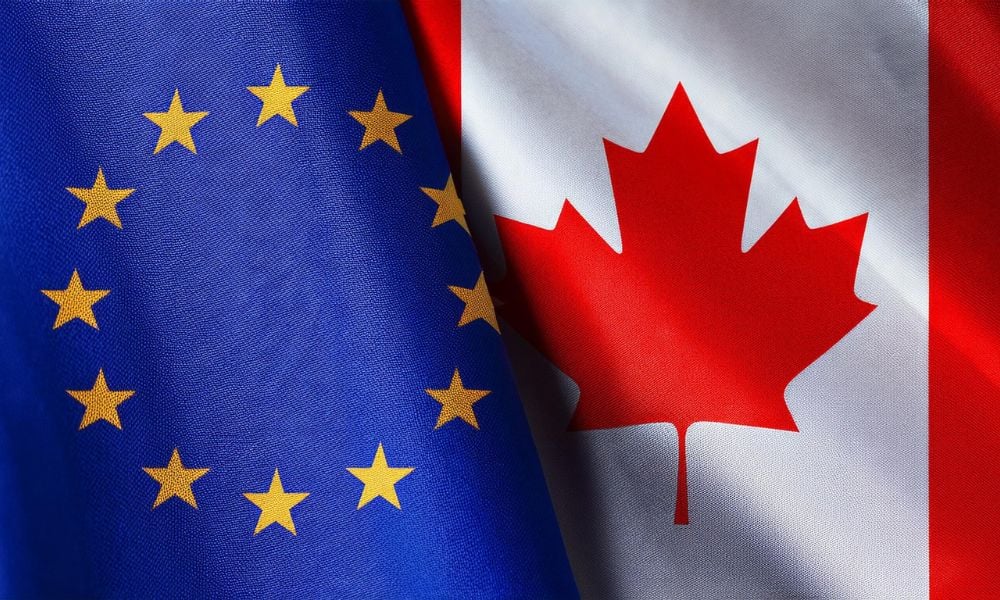
Prime Minister Mark Carney’s trip to Strasbourg last week, addressing the European parliament, had plenty of Canadians both joking and thinking more seriously about how closer relations with the European Union might shape our lives. From memes about better croissants at Tim Horton’s to questions around visa-free travel and harmonized securities regulations, the prospect of a deeper relationship with the E.U. seems to have struck a chord among Canadians. An Abacus survey of Canadians found that, 49 per cent of Canadians support Canada joining the E.U., with 30 per cent opposed to the idea. E.U. membership would be more extreme than the undefined “associate” status proposed by European Commission President Ursula Von Der Leyen last week.
While any kind of agreement has yet to be articulated, let alone signed and ratified, the strong political tailwinds behind closer ties are worth considering. Advisors may soon be fielding questions from clients about economic impacts and the possibility of new travel or retirement residence options in Europe. Dealers may soon have to brief their advisors on any changes in regulation or shifts in capital flows that stem from a deal with Europe.
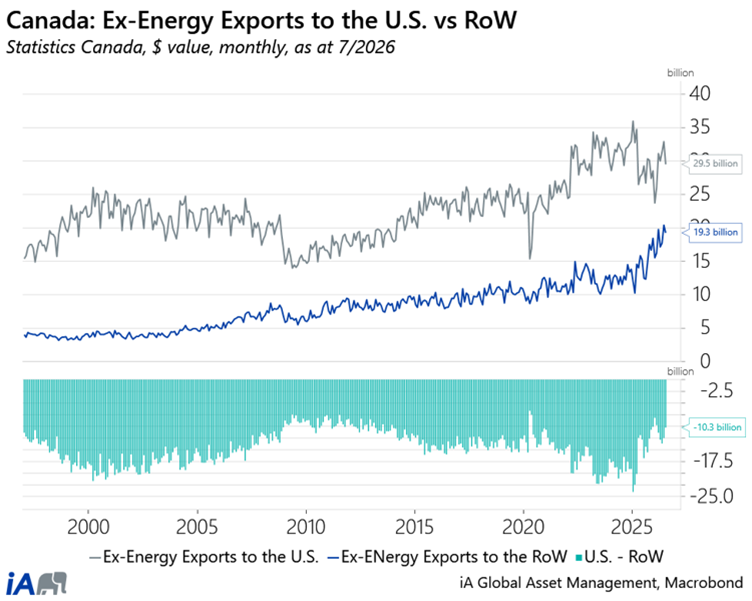
“Carney and his administration, they don't seem to be sitting on their hands. So it seems to be serious, and we need to think that maybe they will accelerate,” says Sébastien Mc Mahon Chief Economist at iA Financial Group. “It will take some time before we get something that is a ‘game changer,’ but it’s part of a trend we’re seeing in trade diversification… Since late 2024 the value of Canada’s exports of goods to the rest of the world [excepting the United States] has doubled from about $10 billion a month to about $20 billion a month. Europe is a part of that trend.”
What EU ties could mean for Canada’s economy, financial markets
Mc Mahon explains that US sanctions on Canada are targeting the export of Canadian goods, with the exception of energy. Despite continued US appetite for Canadian energy, Mc Mahon says that Europe is a likely major market for energy exports. Europe is looking for replacements to Russian natural gas and oil exports, making Canada an attractive partner. Critical minerals will be another essential export sector for European defense companies and high tech manufacturers. He argues that Canadian manufactured goods will probably not be in high demand in Europe, given the relatively strong industrial bases found within the EU.
For advisors who may fear the rise of new European-style securities regulations as part of any deal, Mc Mahon says that fear is unfounded. He believes it is unlikely that Canada gives up its regulatory independence, or that European financial institutions would want to greatly expand their presence in Canada.
On financial markets, Mc Mahon says the nature of the deal would be key to understanding market impacts. He expects, however, that portfolio managers will look more closely at European equities going forward, and that Canadian stocks in energy, defense, aerospace, and critical minerals all could see a pickup if trade ties between Canada and the EU deepen.
There are some significant hurdles ahead of any agreement, however. Mc Mahon notes, for example, that the Comprehensive Economic and Trade Agreement (CETA) between Canada and the EU was signed in 2017, but has yet to be fully ratified, with ten EU member states freezing their approval. The deal is in force, provisionally, but Mc Mahon says it highlights the challenges of making agreements with a 27-member bloc.
There are practical and political challenges in Canada, too. Namely that energy exports to Europe would require the construction of a liquefied natural gas (LNG) terminal somewhere on the Atlantic. With Quebec’s stated opposition to pipelines carrying oil and natural gas across that province, LNG exports may have to go through the port of Churchill and refined petroleum may be limited to Atlantic Canadian sourced oil.
What EU ties might mean for client lifestyles
The politics that underpin Canadian and European willingness to find some kind of a deal can also be seen in a shift in Canadian culture. A survey from the Angus Reid Institute released in August, found that 48 per cent of Canadians now hold “unfavourable” views of Americans. 65 per cent of Canadian respondents said the US should be approached “cautiously,” or as a “potential threat.” Those shifting emotions have practical considerations for Canadians and their advisors, especially for the roughly one million Canadians who spend the winter in the United States. Those snowbirds may now be looking for new destinations, and warmer parts of Europe like Portugal, Greece, and Spain might hold a lot of appeal.
Mc Mahon believes that advisors should prepare to field questions about snowbirds spending long stretches of time in Europe, underpinned by both cultural shifts and the relative strength of the Canadian Dollar against the Euro. He says advisors may want to watch for details of any visa liberalization or extensions beyond the current 90 days in 180 that Canadians get in the Shengen zone.
What to watch for
The details of Canada’s eventual agreement with the EU will matter a great deal, Mc Mahon says, and he will be watching closely for those details to emerge. They will come in any eventual draft agreements, but also through investments by European companies in Canadian infrastructure. He’s watching for how Canada grows in the EU’s trading relationships and how the volume of Canadian goods imported to the EU may change. He’s also watching to see whether the new incentives that Prime Minister Carney announced for investments in Canada attract more European capital to our shores. Those kind of free market moves, he says, could cement closer ties before any trade deal is signed or ratified. While he says that advisors should pay attention to these emerging details, they can also lean on this relationship as a sign that Canada’s economic position is not as dire as the news can sometimes imply.
“You want to help your clients manage their emotions, and in this case there could be another signal that Canada’s economy is going to do fine,” Mc Mahon says. “Advisors’ clients are worries about all of the news that we hear. People see these things and think that the world’s going to hell and Canada’s economy is in the gutters. But when you look at the data, the economy is doing quite well given the circumstances… We can be realistically optimistic about Canada’s economy and see this as a sign that at the end of the road we’re going to hit a different model, which should be more solid because it’s broader and more secure than the model we had before.”