The US regulator faults reputation risk policies after sifting 420,000 pages at nine lenders
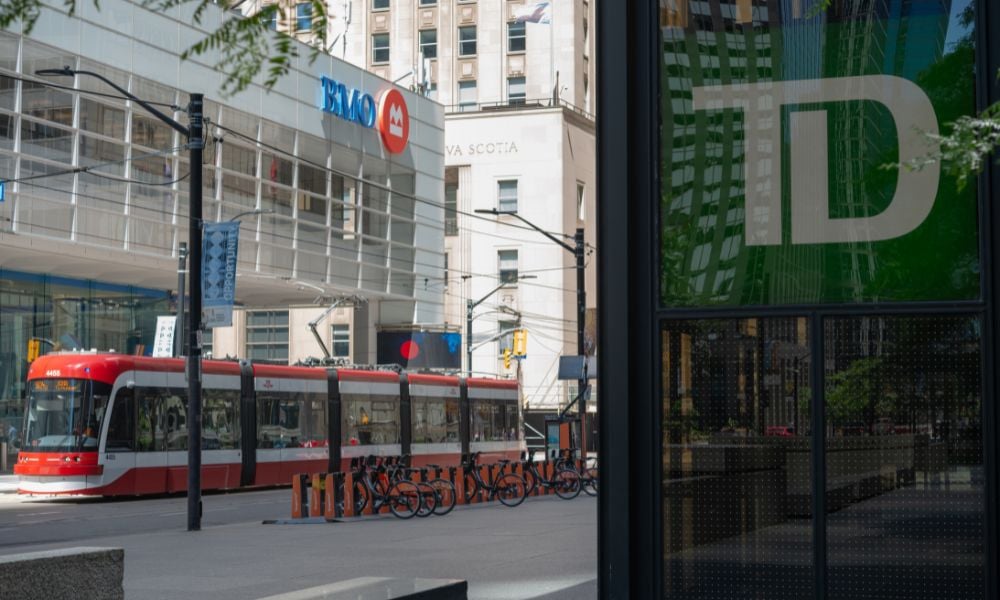
Bank of Montreal and TD Bank were named alongside seven American lenders in a United States regulator’s report on debanking released Wednesday, covering their US national bank operations.
The Office of the Comptroller of the Currency examined whether bank policies or practices required, encouraged, or otherwise influenced banks to deny or limit access to financial services to Americans because of their political or religious beliefs or lawful business activities.
All nine banks had such policies between 2020 and September 2025.
The OCC conducted the review under US President Donald Trump’s executive order, signed in August 2025, stipulating that Americans should not be denied access to financial services because of religious or political beliefs, according to The Canadian Press.
Trump ordered federal bank regulators to determine whether any banks had discriminated and to refer any cases to the Department of Justice.
The review drew on nearly 100,000 complaints at OCC-regulated institutions and approximately 50,000 documents running to about 420,000 pages, the OCC said, plus transaction testing of hundreds of individual onboarding, expansion, and termination decisions.
Comptroller of the Currency Jonathan Gould said in a news release from the Office of the Comptroller of the Currency (OCC) that the report “provides irrefutable evidence that the nation’s largest banks have denied, debanked and discriminated against customers and lawful businesses.”
Speaking in Lexington, Kentucky, Gould said banks should make decisions based on financial risk rather than the political or social preferences of their employees or executives, CNBC reported from a transcript of his remarks.
“We are not forcing these banks to serve every customer,” he said. “Instead, banks should evaluate every customer on objective, risk-based criteria.”
In connection with a 2022 credit request, the report states, BMO evaluated reputation risks under its environmental and social financing guidelines for a customer that manufactured empty firearm magazines among other “tactical” products.
The bank’s senior risk officer approved maintaining the relationship but required continuous monitoring, with a quarterly trigger that “[trailing twelve month] tactical sales must remain below 30 percent of [trailing twelve month] total sales.”
The report says BMO, while reviewing its relationship with a firearms company, noted it attested to the State of Florida in December 2023 that it has no industry-based prohibitions, including on guns and firearms.
It says BMO noted a complaint to the state could lead to an investigation, press coverage and exclusion from Florida municipal business.
TD’s business line sought to extend a small business loan worth less than US$50,000 to a company making civilian-use components for modern sporting rifles.
The escalation team recommended against approval in part because the “applicant or industry represents risk implications that are unacceptable to the Bank.”
About four months earlier, TD’s reputation risk committee endorsed potential future financial guarantees and funding obligations to a large multinational firearms manufacturer and seller.
In February 2021, TD assigned a “High” reputation risk rating to a nonprofit promoting anti-immigration positions during review of a Paycheck Protection Program loan.
TD’s customer talking points said the decision “is based on public statements about immigrants made by [the organization] or people affiliated with your organization, including social media activity, leading up to and following the November 2020 election.”
TD did not respond to a request for comment, and BMO referred The Canadian Press to a statement from the Bank Policy Institute.
The US industry group said it supports fair access and has been “working to ensure that government regulations and policies enable banks to serve law-abiding customers.”
All nine banks told the OCC they have revised, adopted, or consolidated fair access policies, the report states, though no bank has fully and publicly acknowledged past debanking decisions or built a comprehensive remediation program.