A Roth conversion play could reshape how advisers weigh the new US children's vehicle
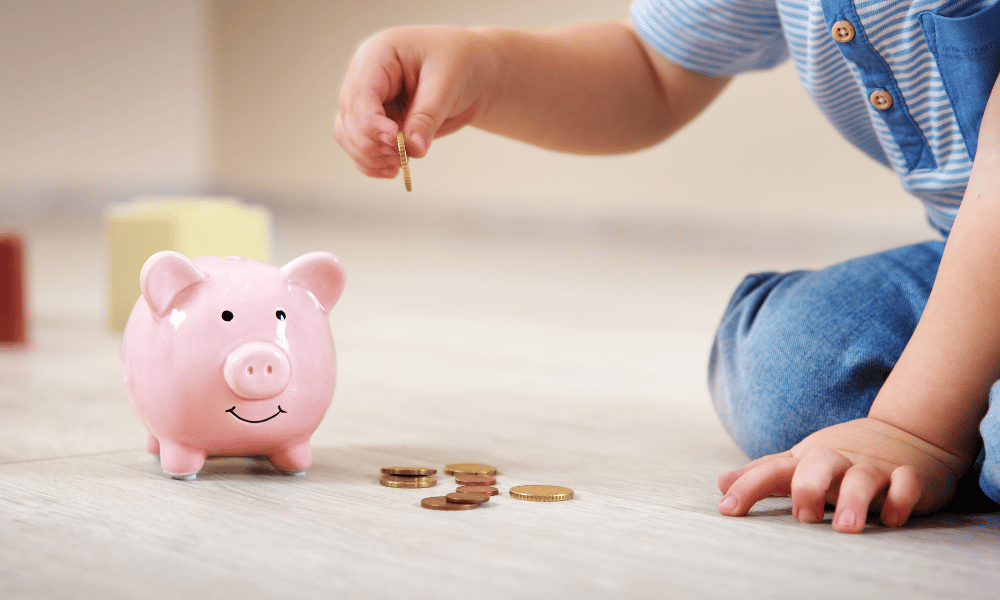
A new US children's investment account launched on July 4 with a feature planners will scrutinise first: it holds 100 percent equities and, unlike a 529 college savings plan, never glides toward bonds as the child ages, according to a Vanguard research note.
That structure sits at the centre of the suitability question now facing advisers.
Trump Accounts, also known as 530A accounts, work like individual retirement accounts for children under 18, with contributions growing tax-deferred, CNBC reported.
Babies born between 2025 and 2028 receive a one-time US$1,000 federal deposit once a parent or guardian opens an account; older children can hold one but do not get the seed money.
Eligibility is limited to US citizens with a valid Social Security number, and no child may hold more than one.
The comparison with existing vehicles is where the planning work lives.
For education goals, 529 plans may win because they allow tax-free withdrawals, and for retirement a Roth IRA can be more advantageous given its tax-free withdrawals and higher contribution limit, CNN reported, citing account materials from Robinhood.
But CNBC flagged a strategy that could tilt the math: converting the pretax and nondeductible funds in a Trump Account, including seed money, employer matches and philanthropic gifts, into a Roth IRA.
Advisers describe it as a way to sidestep the earned-income requirement and start tax-free growth early.
The tax mechanics reward attention.
Individuals contribute after-tax dollars, so only the gains are taxed on withdrawal, while employer, government and nonprofit contributions go in pre-tax and are fully taxable when the money comes out, according to CNN, citing the Congressional Research Service.
Withdrawals generally cannot happen before the child turns 18, after which standard traditional-IRA rules apply, the IRS said; distributions before age 59½ typically face income tax and a 10 percent penalty, with carve-outs for costs such as higher education or a first home.
Contribution room is layered.
Family, friends, and employers can add up to US$5,000 combined per account each year, with the employer share capped at US$2,500 per worker and excluded from the employee's taxable income, as per the IRS.
Contributions from governments and qualified nonprofits sit outside that ceiling.
The employer piece doubles as a benefits play: the US Treasury framed the accounts as a low-cost, tax-preferred perk small businesses can use to attract and keep workers, though that is the department's characterisation rather than an independent finding.
On the asset-management side, the mandates went to the largest passive shops.
By law the money must sit in low-cost, broadly diversified US stock index funds with expense ratios of 0.10 percent or less.
The default is the State Street SPDR Portfolio S&P 500 ETF at a 0.02 percent expense ratio, CNBC reported, with four other options from BlackRock, Vanguard and State Street.
Bank of New York Mellon manages the initial accounts, and families track balances through an app built with Robinhood.
Return projections deserve a client-expectations caveat.
TrumpAccounts.gov estimates a child who receives only the US$1,000 seed could reach about US$6,000 by 18 and US$243,000 by 55, while US$5,000 in annual contributions could grow to roughly US$271,000 by 18 and US$13m by 55, based on the S&P 500's historical average return of more than 10 percent.
CNBC noted those figures run hot against some forecasts: Morningstar's simulations produced an average annual return of 6.3 percent.
Who actually benefits is contested.
"The $1,000 federal contribution at birth helps remove the barrier of having nothing to start with, which has historically been one of the biggest obstacles to saving," said Andy Blocker, head of policy, regulatory and government relations at Edward Jones, in comments to Reuters.
Critics argue the design favours those who can already save.
Adam Michel, director of tax policy studies at the Cato Institute, doubted the measure would work, telling the wire service that handouts have "a long track record of failing to lift people out of poverty."
The real benefit instead flows to families who already have steady jobs and can afford to save, he said.
Researchers at the Urban Institute have similarly warned that low participation among lower-income families could widen wealth gaps.
The corporate and philanthropic money is real and growing.
More than 50 companies have committed to contribute, the US Treasury said, with CNBC listing Goldman Sachs, Morgan Stanley, JPMorgan Chase, BlackRock, State Street, Charles Schwab, Comcast and Visa among them.
Micron pledged US$250m, and Michael and Susan Dell committed US$6.25bn to give 25 million children US$250 each.
The US Treasury also opened a pathway for donors to contribute publicly traded stock directly, Reuters reported.
The White House said US President Donald Trump's holdings in the funds now offered through the accounts pose no conflict, since fully discretionary accounts manage them independently.
Disclosures reported by Reuters put those holdings at between US$7m and US$35.1m.
And US Treasury Secretary Scott Bessent drew fire last year after suggesting the accounts could eventually help privatize Social Security, before saying the administration remained committed to protecting the program, the wire service reported.