RBC ditched a contaminated property receivership. Its buyer just won round two.
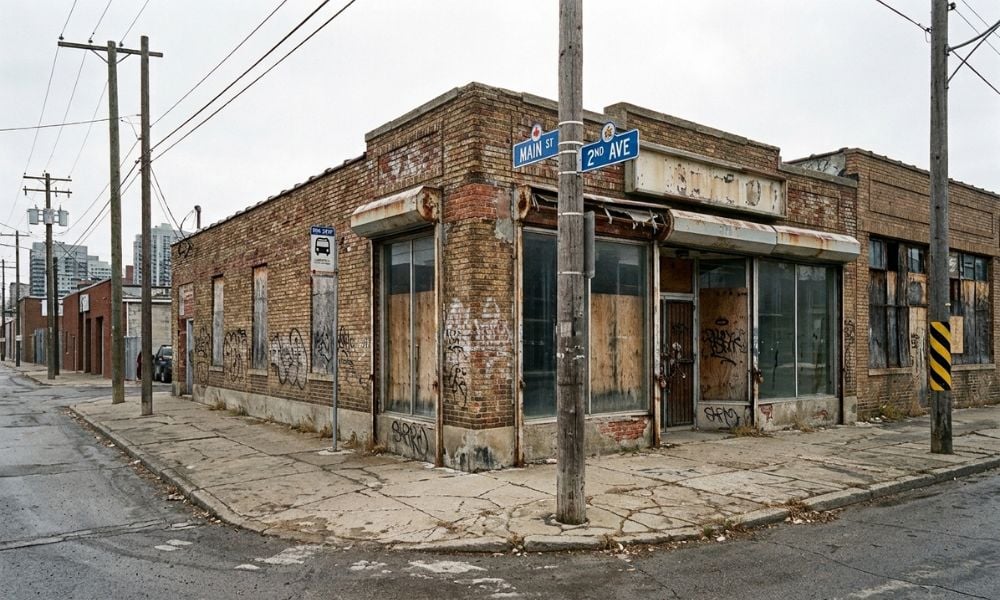
An Ontario court approved a rare second receivership after RBC discharged its receiver over contamination concerns, then sold the debt instead.
The case was decided September 3, 2026 by Justice W.D. Black of the Ontario Superior Court of Justice, Commercial List, following a hearing on August 31, 2026.
The dispute traces back to August 24, 2023, when RBC first commenced receivership proceedings against 2531961 Ontario Inc., along with two personal guarantors of the company's debt, and had FLG appointed as receiver in February 2024. The receiver ran into repeated friction: evicting non-paying tenants, gaining access to the property, and confronting what the court called serious concerns about the building's condition.
In April 2025, an environmental remediation estimate obtained by RBC changed the bank's calculus. Cleanup costs and the risk of being tied to a contaminated sale made the bank reconsider, and it had its receiver discharged on May 11, 2026.
RBC didn't walk away empty-handed. On June 5, 2026, it assigned its security to The Lawrence Phoenix Inc., including a $15.2 million collateral charge and a $1 million guarantee for a related borrower, TNT International Leasing Inc., for total assigned indebtedness of roughly $13.7 million. RBC kept about $2 million of the original debt and a separate $3.55 million personal guarantee for itself. On June 19, 2026, the new creditor issued its own repayment demands, and when the debtor didn't respond, it moved to have AlixPartners appointed receiver over the same real property and to launch a court-supervised sale process.
The respondents fought back on two fronts: arguing a second receivership failed the legal test of being just and convenient and was filed too late, and suggesting RBC and the new creditor were colluding to manufacture a shortfall. The court rejected both. On timing, Justice Black found the 10-year limitation period under Ontario's Real Property Limitations Act applied to a mortgage-enforcement proceeding like this one, not the two-year window under the general Limitations Act. On collusion, the court found no supporting evidence and concluded the theory made little economic sense given the parties' incentives.
The respondents also pointed to a rival environmental assessment allegedly showing shallower, less serious contamination, but could not name the consultants behind it or explain their conclusions. The court gave that evidence little weight.
Justice Black found the receivership "reasonable, just and convenient," citing the deteriorating condition of the property, an unresolved safety issue involving a retail tenant still occupying a building found unsafe due to roof failure and electrical hazards, and unresolved questions about insurance coverage. AlixPartners was appointed receiver and the proposed sale process was approved.
For lenders and workout teams, the case confirms that a mortgage-enforcement receivership falls under the ten-year limitation period in Ontario's Real Property Limitations Act rather than the shorter general limitation period, and that discharging a receiver does not extinguish the underlying security, leaving an assignee free to seek a second receivership later. It also shows how environmental liability can reshape a bank's exit strategy well before a property ever reaches market.