US officials quietly court Ottawa on Keystone XL as Canada weighs energy security and export gains
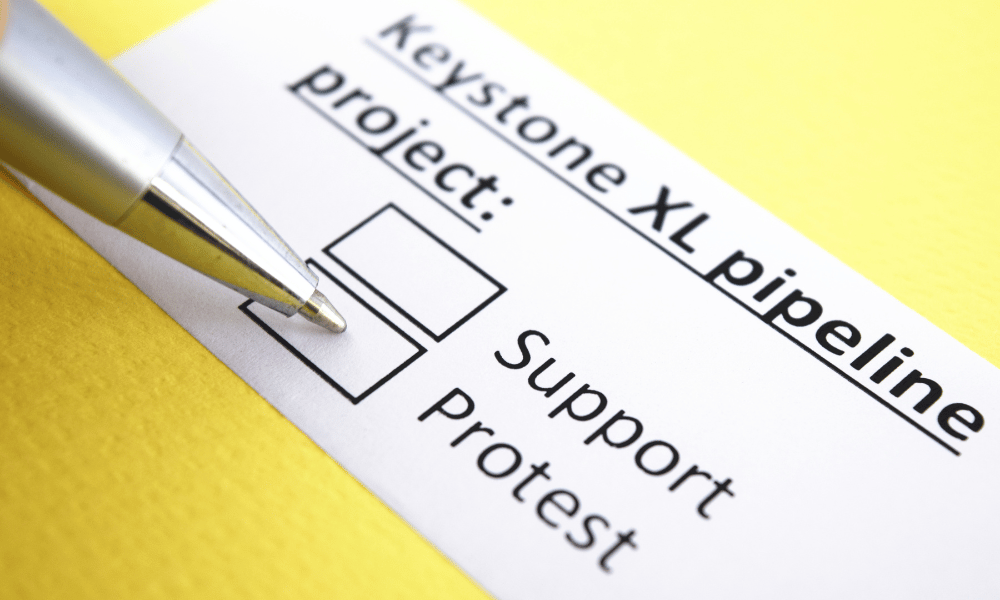
Keystone XL, the pipeline many investors wrote off, is back in play – and Canadian officials and a major bank CEO are both pushing new momentum behind it.
Canadian officials met representatives of the Trump administration in Houston this week to discuss a proposed revival of part of the cancelled Keystone XL oil pipeline, Canada’s Natural Resources Minister Tim Hodgson said, as reported by BNN Bloomberg.
The project, proposed by Canadian pipeline company South Bow and its US partner Bridger Pipeline, could increase Canada’s crude exports to the US by more than 12 percent if it goes ahead.
According to Reuters, a White House official said the Trump administration is working with Canada to secure the permits needed for the proposal.
The official said “the president's entire energy team has been working diligently with our partners in Canada to work through the permitting process.”
Keystone XL is fully permitted on the Canadian side, but a presidential permit would still be needed to cross the Canada–US border, and state regulatory permits would also be required, Reuters said.
Hodgson said he and Canada’s Ambassador to the US, Mark Wiseman, discussed the South Bow/Bridger project with US Energy Secretary Chris Wright and US Secretary of the Interior Doug Burgum during a meeting in Houston.
He said Canada is framing the prospect of a new cross‑border oil pipeline as a way to help the US achieve energy security “even as the war in Iran disrupts supplies and raises prices for consumers,” according to his interview at the CERAWeek by S&P Global conference.
Hodgson noted that while “(the US) are the largest producer of oil in the world” at roughly 12 to 13 million barrels a day, they use about 20 million.
He said Canada provides “about 63 percent of that difference.”
Many US refiners depend on roughly 4.4 million bpd of Canadian exports, BNN Bloomberg noted.
Hodgson declined to say whether the Trump administration has indicated it will support the South Bow/Bridger project or try to fast‑track US approvals.
The White House did not immediately respond to a Reuters request for comment.
The relationship backdrop remains tense.
US President Donald Trump’s tariff wars and annexation threats have strained relations with Canada, even as he has repeatedly called for lower oil prices and US refiners continue to rely on Canadian barrels.
Hodgson noted that Canada is pushing ahead with a planned 300,000 bpd expansion of the Trans Mountain pipeline from Alberta to the Pacific Coast to grow oil exports beyond the US, as reported by BNN Bloomberg.
Prime Minister Mark Carney has been travelling the globe to court new customers for Canadian energy in an effort to reduce the country’s reliance on the US market.
“What we need to do, as the Prime Minister has said, is not sell less to the United States. We need to sell more to other people,” Hodgson said.
On the domestic side, National Bank of Canada chief executive Laurent Ferreira urged an immediate Keystone restart and a broader energy build‑out.
“We need to revive Keystone right now,” he said at his bank’s annual financial services conference in Montreal. “The infrastructure is already partly built,” the Financial Post reported.
Ferreira said more domestic energy production and distribution, as well as more global export, are necessary steps if Canada is to become an energy superpower “to support the country’s security and economic sovereignty.”
He said Canada needs to “double down on LNG out west… (and) we need to bring natural gas to Quebec and Ontario. Manufacturing will need energy, gas flow to Quebec.”
He argued there is “an economic and social case” for increasing offshore oil, natural gas and LNG production in Eastern Canada, including Quebec, the Financial Post reported.
He said he was floored to discover New Brunswick was importing Australian gas despite previous plans for four LNG export terminals on the Atlantic coast, and that these projects need to move faster.
Ferreira added that producing and exporting more Canadian energy would give trading partners a “much safer” alternative to Venezuelan oil.
He said he is encouraged by what he sees as a shift in Ottawa and “a clear focus from our government to put Canada back on track (via) productivity and being a world leader,” with better engagement between Ottawa and the business community than before.
Even so, he warned that execution remains a challenge.
Ferreira said real change is happening too slowly, especially when political goals trump economic ones, and he singled out interprovincial trade barriers as a major concern.
He said the cost to the economy is “ridiculous” and argued that politics is the only thing holding back progress, as per the Financial Post.