Shell doubles down on gas as Canada’s regulator maps a wind‑ and nuclear‑powered grid
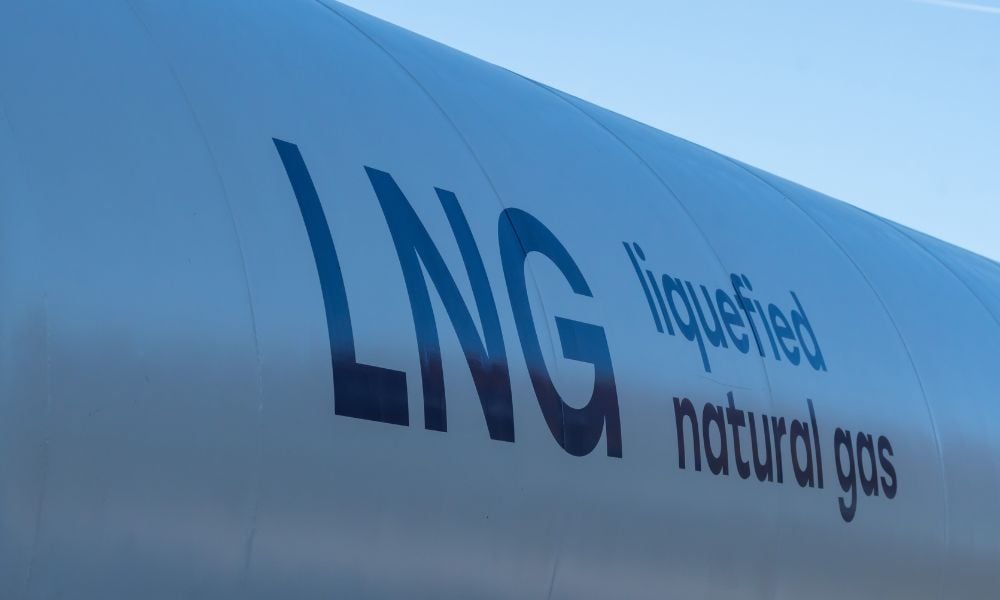
Liquefied natural gas is shaping up as both a growth engine and a flashpoint in the energy transition, even as Canada braces for a surge in electricity demand and renewable power by 2050.
Global LNG demand could jump 54–68 percent by 2040 and 45–85 percent by 2050 from 422 million metric tons in 2025, driven by rising Asian demand, according to Reuters.
Shell, described by Reuters as the world’s biggest LNG trader, now pegs 2040 demand in a narrower band of 650–710 million metric tons per year, compared with last year’s wider forecast, and extends its outlook to 2050 at 610–780 million metric tons per year.
Shell plans to lift its LNG sales by 4–5 percent a year, while stressing that these figures are not final because the Iran war has disrupted oil and LNG trade.
Shell positions LNG as core to the future energy mix.
The company said the superchilled fuel will be a vital balancing fuel in a future energy system and argued that its projects are competitive on both cost and emissions.
Shell added that global gas consumption may peak in the 2030s and has already peaked in regions such as Europe and Japan, but still expects LNG demand to grow.
LNG will account for more than half of overall natural gas demand growth to 2040, with Asia responsible for 70 percent of that increase, Reuters reported.
That strategy faces a rising challenge from climate‑focused investors.
At Shell’s 2025 annual general meeting, climate activist investor ACCR, acting with a group of shareholders managing combined assets of $86bn, gained around 21 percent support for a resolution questioning Shell’s LNG demand outlook.
The group, which included Brunel Pension Partnership, Greater Manchester Pension Fund and Merseyside Pension Fund, asked Shell to provide more information on how its growth assumptions align with global energy demand and its plan to be net zero by 2050.
In its response, Shell defended its LNG strategy, but ACCR said key issues remain.
ACCR’s Oil and Gas Strategy Lead Nick Mazan argued that Shell’s statement did not show how LNG could outperform renewables on cost or emissions and thus “beat other sources of energy.”
He warned that geopolitical shocks that trigger LNG price spikes could erode demand.
In parallel, Canada’s own energy outlook underscores how electricity, natural gas, and LNG could reshape national supply and trade patterns.
In a new long‑term report, the Canada Energy Regulator (CER) said rising electricity demand and the rapid growth of renewables are transforming the domestic energy system, while expanding natural gas production and potential gains for oil could strengthen Canada’s position in global markets.
In its Canada’s Energy Future 2026: Energy Supply and Demand Projections to 2050 report, the CER sets out four baseline‑based scenarios—Current Measures, Higher, Lower and Canada Net‑Zero.
The Canada Net‑Zero scenario explores potential pathways to a 2050 net‑zero target.
The CER said electricity becomes increasingly central as homes, industries and technologies such as AI rely more on the grid.
Generation rises between 30 percent and more than double today’s levels by 2050, with more than 96 percent coming from non‑ or low‑emitting sources, and interprovincial electricity flows more than double in all scenarios, the regulator said.
CBC News reported that the same modelling shows electricity consumption growing 44 percent from 2023 to 2050, with system capacity climbing from 160 gigawatts to 310 gigawatts.
The CER expects wind to drive much of that growth, with output rising from 40 terawatt‑hours in 2023 to 277 terawatt‑hours by 2050, while solar also expands.
These variable sources are backed by higher generation from hydroelectricity, nuclear and natural gas, CER chief economist Darren Christie told CBC News.
Ontario is expanding nuclear capacity with the first of four small modular reactors, at a total cost of more than $20bn, and that Alberta and Saskatchewan are pursuing similar projects.
In all four scenarios modelled by the CER, natural gas production climbs from about 19 billion cubic feet per day in 2025 to 21–32 billion cubic feet per day by 2050.
The CER says how far it grows, and whether Canada can sell beyond the US market, will largely depend on future LNG export capacity.
By 2050, about a quarter of Canadian gas production is tied to LNG exports, making LNG one viable pathway to expand energy trade outside North America, the regulator said.
CBC News reported that only one LNG facility on the West Coast is currently operational, with several others in development or under construction.
The longer‑term picture for crude oil is more mixed.
The CER said production ranges from a 12 percent decline to an 18 percent increase by 2050, depending largely on global prices, and noted that in higher‑production scenarios Canada continues to send most oil exports to the US if pipelines are used much as they are today.
CBC News reported that in the CER’s baseline scenario, oil output peaks at 6.1 million barrels per day in 2042 before easing to 5.9 million barrels per day by 2050.
On emissions, the CER said national greenhouse gas output falls in all scenarios, driven by a cleaner grid and reductions across most sectors, but plateaus around 2035 under current policies.
CBC News reported that all four scenarios show emissions declining, with the baseline case flattening in 2035.
Both sources said reaching net‑zero by 2050 would require an economy‑wide transformation towards low‑carbon technologies and additional climate action.