Every forecaster in a Reuters poll now sees a December move, up from fewer than half
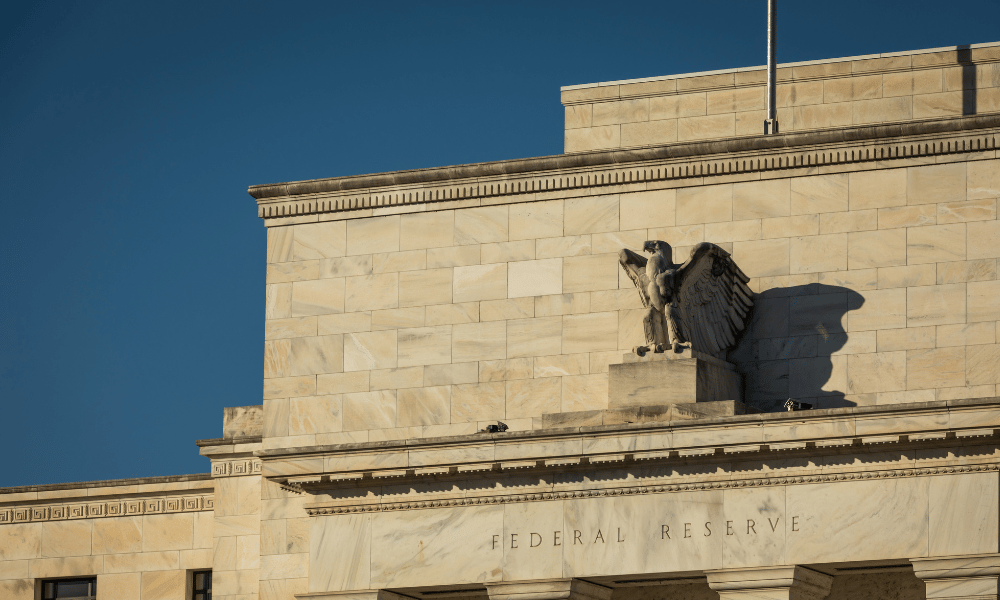
The US Federal Reserve is expected to leave its benchmark rate in a 3.75 percent to 4.00 percent range at its October 27-28 meeting, then raise it a quarter point in December.
Of the 100 economists surveyed by Reuters between October 16 and 20, 94 expect the hold, in line with market pricing, and all 100 expect a December increase, up from fewer than half in the September poll.
The US Federal Open Market Committee raised rates by 25 basis points in September in a unanimous vote.
The October meeting falls days before the November midterm elections.
Nearly 60 percent of forecasters in the Reuters poll see the policy rate peaking in a 4.00 percent to 4.25 percent range.
The rest, 38 of 92, predict at least two further increases, up from one-fifth in the September survey.
“You have a strong economy and you have inflation. There’s really no reason for you to worry so much about getting interest rates higher, this is like the easiest choice,” Alex Pelle, senior US economist at Mizuho Securities, told Reuters.
“Them not going in October is the wrong call from a policy point of view,” he said, adding that “they’ll go 25 in December, but the risk is greater they end up going 50 than they don’t go at all.”
Inflation has run above the Fed’s 2 percent target for nearly six years, Reuters reported.
Poll medians show the Personal Consumption Expenditures Price Index, the Fed’s preferred inflation gauge, staying more than 100 basis points above 2 percent over coming quarters and not returning to target until at least 2028.
Higher energy costs tied to US President Donald Trump’s war with Iran, along with new tariffs on imported goods, have pushed living costs up, with oil holding above US$100.
“The risks are in the direction of a Fed that ultimately needs to hike rates more than we expect,” said Michael Gapen, chief US economist at Morgan Stanley, in the Reuters poll.
Longer-dated Treasury yields surged to multi-decade highs on October 7 on higher inflation and near-term rate expectations before retreating nearly 25 basis points as the likelihood of an October hike slipped away, Reuters reported.
Rate-sensitive two-year Treasury note yields were also whipsawed higher then sharply lower.
Pending home sales hit an all-time low in records stretching back to 2001, the National Association of Realtors reported.
The index slid 7.3 percent for the month and was off 11.3 percent from a year ago, against a Wall Street estimate of a 0.4 percent decline, CNBC reported.
Privately owned housing starts fell at a seasonally adjusted annualized rate of 5.2 percent on the month, while building permits were off 0.2 percent, according to Commerce Department data cited by CNBC, against consensus expectations of a 0.4 percent decline and a 2 percent gain.
Single-family permits totalled 845,000, down 4 percent from August and the lowest number since 2023.
“Market conditions weakened in September due to fast-rising mortgage rates,” said Lawrence Yun, the NAR’s chief economist. “Although job growth and income gains can support home purchases, housing affordability is more affected by changes in mortgage rates.”
The rate for a 30-year mortgage was above 7 percent for most of September, ending the month around 7.6 percent, according to Mortgage News Daily.
Home builder sentiment is at lows not seen in 14 years.
Goldman Sachs economist Ronnie Walker forecasts residential investment declining 2.5 percent, 4 percent and 1 percent over the coming three quarters, single-family starts of 875,000 in 2027, and existing home sales of 3.9 million, 26 percent below pre-Covid 2019 levels.
More than 95 percent of mortgage borrowers hold rates below the prevailing level and 65 percent are 2 percentage points below.
“Sustained higher mortgage rates will continue to have their most pronounced impact on housing turnover, and the recent run-up in rates is likely to push existing home sales lower in the coming months,” Walker wrote in a client note reported by CNBC.
Futures pricing implies a strong chance of a quarter-point hike in December and another in March 2027, according to the CME Group’s FedWatch tool.