September FOMC minutes set no date, and officials say incoming data will decide the timing
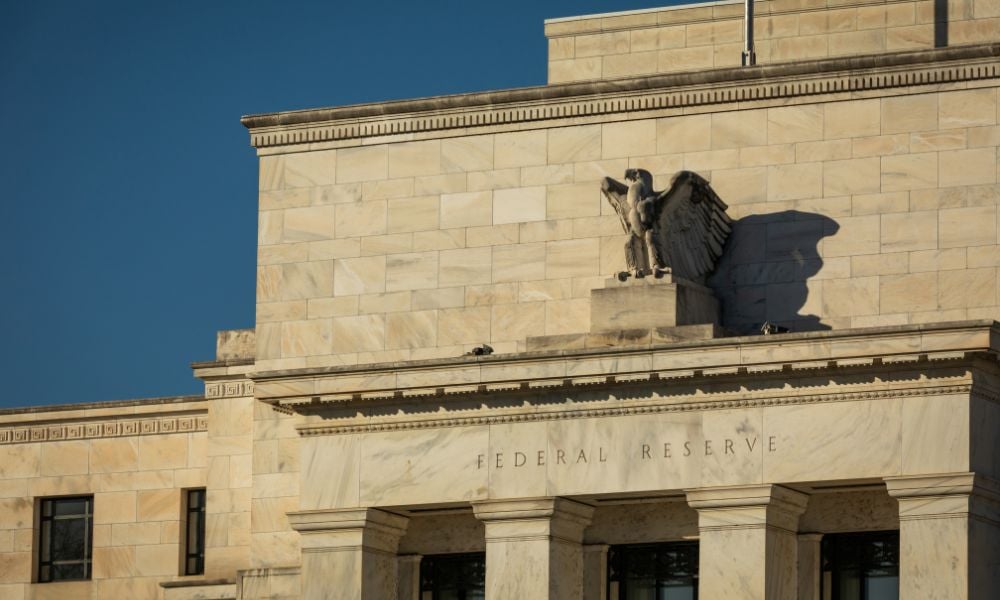
Most US Federal Reserve policymakers expect one more quarter-point increase in the federal funds rate before the end of 2026, with no timing attached.
Minutes of the September meeting of the Federal Open Market Committee, released Wednesday, record that "with regard to the outlook for monetary policy beyond the current meeting, most participants assessed that another increase in the target range for the federal funds rate would likely be appropriate by year end."
According to the minutes, participants said they approached each meeting with an open mind and that decisions at future meetings "would depend on incoming information."
The committee voted 12 to 0 to raise the target range by a quarter percentage point to 3.75 to 4 percent, effective September 17.
The Board of Governors raised the interest rate paid on reserve balances to 3.90 percent and the primary credit rate to 4.0 percent the same day.
The New York Times reported it as the first increase since July 2023, and that 16 of the 18 policymakers who submitted rate estimates expected at least one more quarter-point move by year end, taking the range to 4 to 4.25 percent.
In the minutes, many participants described the increase as protection against inflation staying above target if demand grows faster than expected or supply shocks continue.
Several said they viewed the previous policy rate as not restrictive or only mildly restrictive.
Some said the artificial intelligence buildout could push demand above supply over the medium term and raise inflation.
The next FOMC meeting is October 27 and 28.
John C. Williams, president of the Federal Reserve Bank of New York and vice chair of the FOMC, said last week there was "no need for urgency" following September's increase, the New York Times reported.
Fed vice chair Philip N. Jefferson said two days later that assessing the timing of additional moves "may take more time."
Reuters reported that Dallas Fed president Lorie Logan believes at least two more quarter-point increases will be needed.
Fed chairman Kevin M. Warsh described the September increase as removing a "dose of accommodation so that financial and credit conditions would be more consistent with our ultimate objectives," the New York Times reported.
Warsh has not spoken publicly since that September 16 press conference, according to Reuters.
Staff estimates in the minutes put total PCE inflation at 3.8 percent in August and core PCE at 3.4 percent, with 3.6 percent and 3.2 percent respectively under the new Bureau of Economic Analysis methodology.
The unemployment rate was 4.1 percent in July and August.
Nominal Treasury yields rose around 35 basis points across the two- to 10-year segment over the intermeeting period, the minutes record, attributed in market commentary to geopolitical developments, the US Treasury buyback program, and private debt issuance financing AI infrastructure.
Reuters reported the US 30-year mortgage rate at its highest in nearly three years.
A few participants "noted the importance of planning for market stress" and suggested strengthening the Fed's tools for addressing market dysfunction "while limiting the Federal Reserve's footprint in the Treasury market."
Foreign investors withdrew US$26.3bn from emerging market stocks and bonds in September, the first monthly outflow since June, according to an Institute of International Finance report carried by Reuters.
Heavy selling of South Korean equities accounted for US$19.2bn of that.