Analysts are divided on how far the Fed will go, as surging Treasury yields add pressure to an already uncertain rate outlook
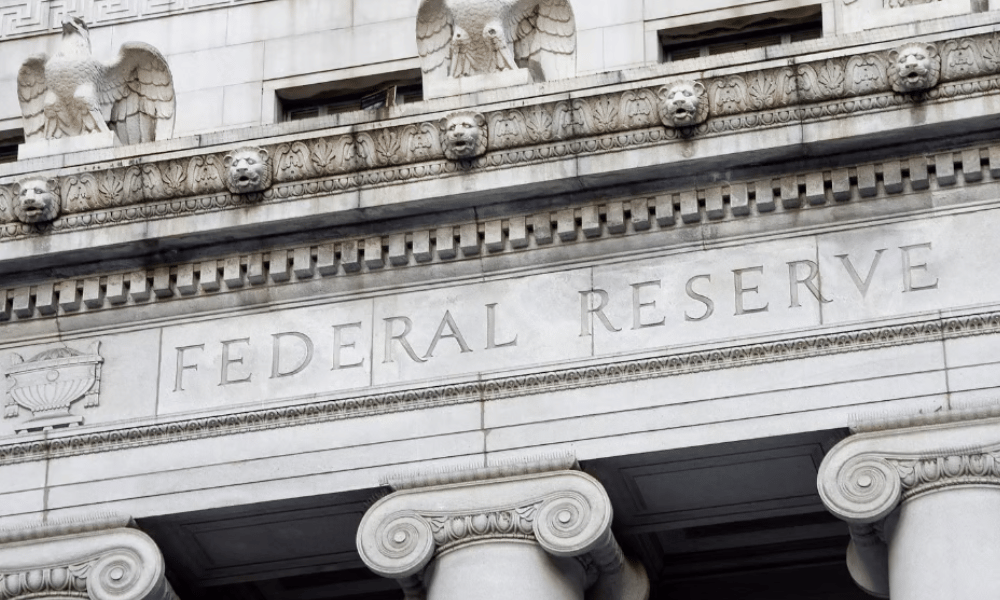
The US Federal Reserve raised interest rates in September 2026, as surging Treasury yields reached their highest levels in decades. Traders are now pricing in further hikes in the months ahead.
The 30-year Treasury bond yield reached just over 5.46 percent this week, a level not seen since 2004. The benchmark 10-year Treasury yield hit 5.14 percent, touching a 19-year high.
What's driving these rising Treasury yields?
Markets have pointed to several contributing factors:
- The Iran war has pushed energy prices higher
- An AI-driven buildout of data centres has driven up costs for key commodities and inputs
- Government borrowing is rising across major economies
Germany's finance agency said this week it expects federal borrowing to reach a record EUR525.5 billion in 2026.
Business activity data released this week showed strong US growth and rising inflation pressures. Traders responded by raising bets on further Federal Reserve rate hikes. US 30-year mortgage rates have risen to around seven percent, up roughly a percentage point from before the Iran conflict.
Joseph Brusuelas, chief economist at RSM, said the period of looking past short-term supply shocks has ended. "The bias has to be towards restoring price stability, and they should take what's going on seriously," he said.
RSM's modelling found that a 5.5 percent 10-year yield would lower US growth to 1.5 percent and push unemployment to 4.7 percent. Core inflation would still hold at 2.4 percent under that scenario.
"The Fed is underestimating what's going to be necessary to restore price stability – that we're probably not talking two or three hikes. We're talking five or six," Brusuelas said.
What surging Treasury yields mean for Canadian advisors
Manulife Investment Management senior global macro strategist Dominique Lapointe has described sticky US inflation as already reshaping the fixed income outlook. US yields at multi-decade highs are affecting government bond pricing and borrowing costs in global markets. That includes Canadian advisors with US fixed income exposure.
Not all analysts expect an aggressive Fed response. Citigroup economist Andrew Hollenhorst argued in a note that the yield rise reflects stronger expected growth, not a Fed falling behind on inflation.
"The rise in yields has not been due to expectations of a too-dovish Fed allowing inflation to persistently exceed target," Hollenhorst wrote. "It should not be surprising that this has led to both higher shorter-term and longer-term yields."
New York Fed President John Williams said Thursday that another rate hike by year-end is "reasonable." He added that officials need to watch the data before committing to further increases. Philadelphia Fed President Anna Paulson described potential tightening as "modest."
Warsh's market-guided approach adds uncertainty
Federal Reserve Chairman Kevin Warsh has emphasized letting markets help guide policy. UBS economist Jonathan Pingle wrote that Warsh places more weight on market signals than on economic data. This is a shift from the forward-guidance approach used after the 2008 financial crisis.
Pingle speculated that Warsh's views align more closely with Cleveland Fed President Beth Hammack than with other FOMC members. Hammack is described as one of the most hawkish voters this year.
With the 30-year bond at its highest since 2004, that market signal is pointing toward tighter policy. Evercore ISI's Krishna Guha warned of the risks of operating without clear guidance. "Lack of guidance also means whatever decision they take risks generating an outsized market response," Guha said – whether the Fed hikes or holds.
With surging Treasury yields at multi-decade highs and analyst views divided, Canadian advisors with US fixed income exposure should monitor the Fed's next rate decision closely. The FOMC meets regularly throughout the year, and the next scheduled decision will be published on the Federal Reserve website.