Impacts for US discussed ahead of possible trade deal, but CEO emphasizes Asia’s role in AI infrastructure story
Every month at WP we go deep on a subject that matters to Canadian advisors. This May we’re exploring global markets.
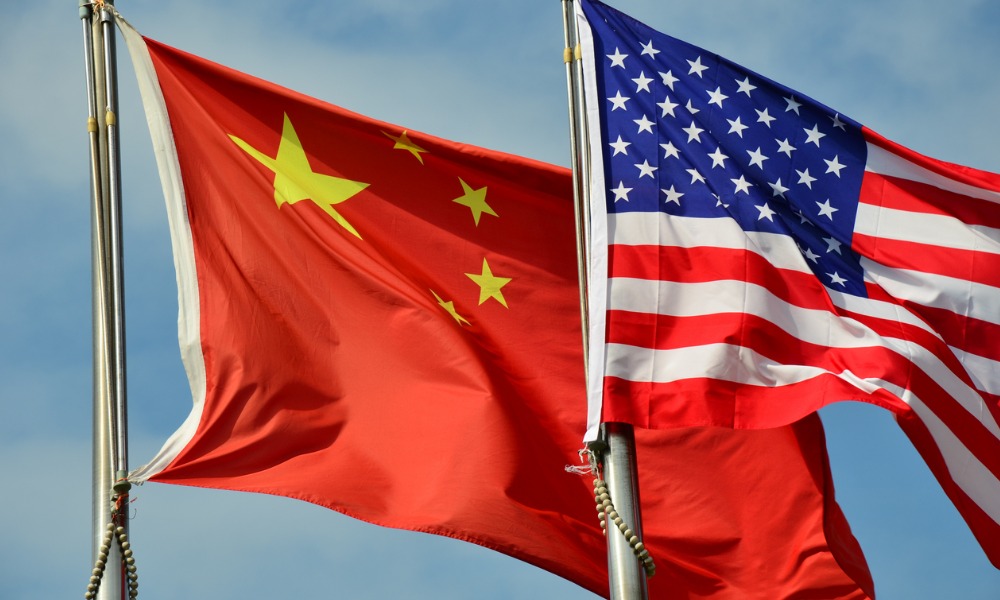
President Donald Trump is in China today, for direct talks with Chinese President Xi Jinping and flanked by a coterie of American CEOs, including Tim Cook, Elon Musk, and Larry Fink. Much has been made about how Trump will approach this meeting and the stakes for the US economy amid the ongoing issue of the trade war with China and the ongoing war in Iran. There’s been talk about China buying Boeing aircraft and US soybeans, while wider murmurs about US pressure on China over Iran underpin the summit.
Tyler Mordy, CEO and CIO at Forstrong Global, draws this meeting in stark contrast to the last US state visit to China, during Trump’s first administration in 2017. Nine years ago that meeting took place during the fading days of globalization. Now the two Presidents meet as the two main powers in a fractured world. While Mordy believes the market is watching this meeting through the lens of tariffs and trade balances, he argues that a more fulsome view of Asia’s role in the global AI infrastructure trend should be understood.
“The great irony today is that we’ve got this interconnected, multipolar world. We hear about fragmentation, regionalization, reshoring, friendshoring, whatever you want to call it. And yet the physical economy, particularly as it relates to Asia and the West, is still deeply interconnected,” Mordy says. “Everything from semiconductors to critical minerals to food and fertilizer flows, , they’re all really deeply interconnected. So we built this hyper efficient global system optimized for peace and globalization. And now we’re trying to operate it in a fragmented geopolitical world.”
Any signs of rapprochement between the US and China that emerge from this meeting should, in Mordy’s view, be seen as a tailwind for Asian cyclicals. The physical components of AI are overwhelmingly manufactured in Asia. Taiwan leads in advanced chip manufacturing. South Korea leads in memory chips. China has huge scale and specialization and has built much of its recent economic success on a move up the value chain, into specialized manufacturing of solar panels, robotics, electric vehicles, and other technical components.
While Mordy expects that this summit should be positive for trade and supply chains between the two nations, he also notes that if there aren’t any agreements reached, global supply chains should find a way to get Asia’s AI components to the US markets where they’re needed. Both countries need a deal, he says, but we’ve seen four major supply shocks in the past six years: COVID, the Russian invasion of Ukraine, US tariffs, and the closure of the Strait of Hormuz. In the face of all those shocks, industries have found a way to get goods where they needed to go.
From an investor’s standpoint, assuming that incentives point the US and China towards some sort of a deal, Mordy believes the play is in Asian equities. Much of East Asia saw a pullback in the outbreak of the Iran war over concerns about energy, but most of those markets have recovered. Certain Chinese stocks, he says, could benefit from the more risk-on stance that a deal would motivate some global investors to take. There could also be upside in smaller Asian markets with capacity to act as economic go-betweens. Vietnam, for example, has benefitted from broadly positive economic relations with both the United States and China.
For Canadian advisors, Mordy believes that the biggest risk in current allocations may be the ongoing overweight to the United States, and the exposure to large-cap tech implied by that weighting. Many investors declared global diversification dead during the peak of US exceptionalism, but over the past year it has worked extremely well, with different countries offering distinct ways to access major macro trends. East Asia can be used to access component manufacturers in the AI boom, for example, while Latin America can offer more direct access to commodities required for power generation and data centre buildouts. Mordy believes that emerging markets are a zone for active management and that while incentives may push Trump and Xi closer together, the volatility we’ve seen in that relationship can be managed through diversification.
“This is only the first of four summits. It’s strategic and there are a lot of incentives on both sides to come to a deal, but of course there are always risks,” Mordy says. “To counter that risk, you want to have your money all over the world. You want some in Asia, some in the United States, some in Canada, some in Latin America, and some in Europe. That’s increasingly what winning portfolios are going to look like in a multipolar world.”