The White House assembles a who's who of corporate America for Trump's Beijing summit
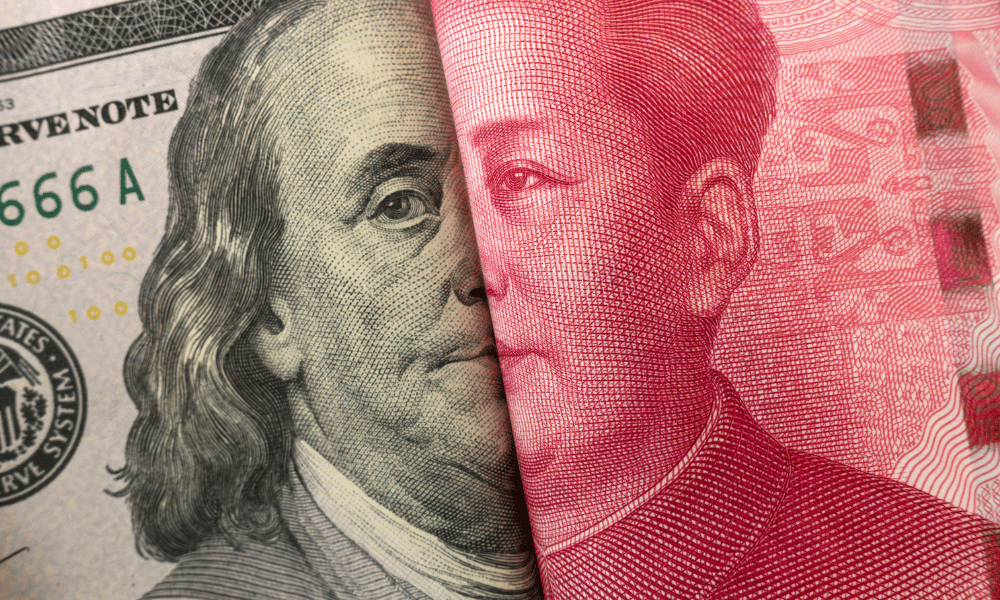
The CEOs of Apple, BlackRock, Goldman Sachs, Citigroup, Mastercard and Visa are flying to Beijing this week, not for a conference, but as part of the US presidential delegation.
A White House official, speaking on condition of anonymity, said US President Donald Trump has invited executives from some of the biggest US companies to join his state visit to China, according to CNBC.
The delegation also includes Tesla CEO Elon Musk, Boeing CEO Kelly Ortberg, GE Aerospace's Larry Culp, Blackstone's Stephen Schwarzman, Qualcomm's Cristiano Amon, and Meta Platforms executive Dina Powell McCormick, among others, the official said.
Trump has said he hopes to secure business deals and purchase agreements with Beijing.
Reuters said that China is expected to announce purchases related to Boeing airplanes, American agriculture, and energy.
Boeing and China have been in prolonged talks for a deal that industry sources told Reuters could include 500 737 MAX jets plus dozens of widebody jets powered by GE engines — potentially the single largest airplane order in history and China's first major Boeing order since 2017.
Nvidia CEO Jensen Huang did not make the cut.
Huang was not invited, a source told Reuters, with the White House focusing on agriculture and commercial aviation.
Huang told CNBC last week that being invited would be “a great honour to represent the United States.”
The New York Times reported that behind the public messaging of peace and stability, both governments are quietly preparing for a prolonged economic war, mapping vulnerabilities and sharpening tools to inflict pain on the other.
In April, Beijing announced sweeping rules giving regulators the power to investigate corporate records, interrogate employees, and bar executives from leaving China if they are found helping shift supply chains out of the country.
China also invoked a 2021 blocking measure ordering five Chinese refineries to defy US sanctions tied to Iran.
“China is signalling more strongly that they are locked and loaded,” Andrew Gilholm, a China expert at Control Risks, told the Times, warning of “a much more frequent or widespread use of Chinese countermeasures against US sanctions.”
Sean Stein, president of the US-China Business Council, told the Times companies now face a stark choice between breaking Chinese or American law.
Trump said Monday that a ceasefire with Iran was “on life support” after Tehran's response to a US proposal made clear the two sides remained far apart, Reuters reported.
Iran demanded compensation for war damage, an end to the US naval blockade, resumption of Iranian oil sales, and emphasised its sovereignty over the Strait of Hormuz — which normally carries one-fifth of the world's oil and gas supply.
“I would call it the weakest right now, after reading that piece of garbage they sent us. I didn't even finish reading it,” Trump said.
Brent crude futures rose 3 percent to more than US$104 a barrel as the deadlock left the strait largely closed.
A Reuters survey found that OPEC output fell in April to its lowest in more than two decades.
A Reuters/Ipsos poll completed Monday found two out of three Americans said Trump has not “clearly explained the goals of US military involvement in Iran” — a political liability heading into midterm elections less than six months away.
Trump has been leaning on China to use its influence to push Tehran toward a deal, making Iran another pressure point at the Beijing summit.
Trump told reporters Monday he plans to raise Taiwan arms sales directly with Xi.
“President Xi would like us not to, and I'll have that discussion. That's one of the many things I'll be talking about,” he said.
In December, Trump announced the largest-ever US weapons package for the island, worth more than US$11bn.
Trump also said he would raise the case of jailed Hong Kong media tycoon Jimmy Lai — sentenced in February to 20 years in prison on national security charges, Reuters reported — and Zion Church founder pastor Jin Mingri, arrested late last year.
The summit agenda is expected to cover trade, artificial intelligence, export controls, Taiwan, and the Iran war, with both sides entering talks after weeks of escalating tensions.