S&P Global Energy ties the 100 MMtpa target to $50,000 per household and 250,000 jobs a year
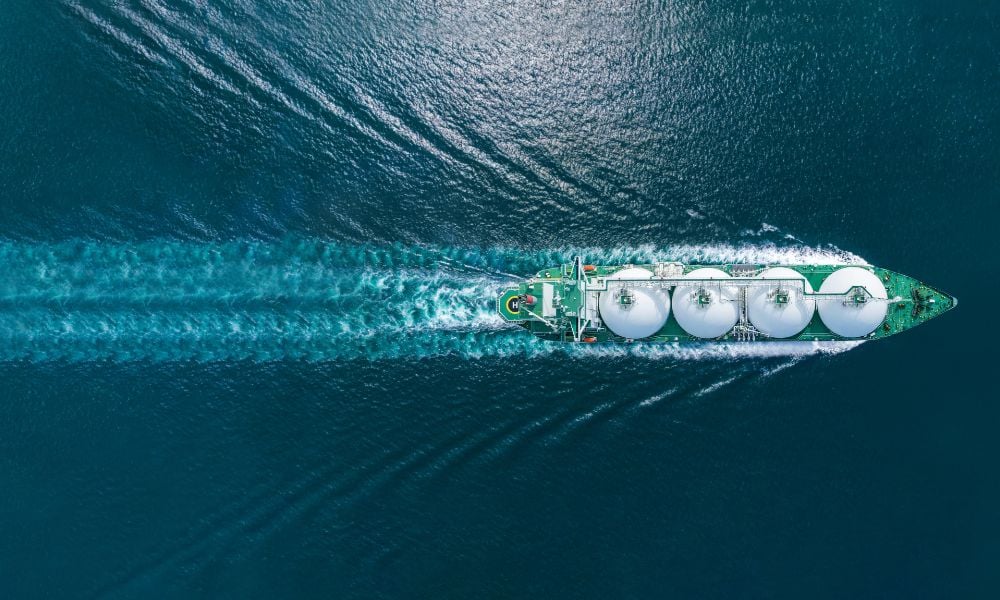
Nearly $1tn of investment across the liquefied natural gas (LNG) value chain would flow into Canada if Ottawa meets its goal of 100 million tonnes per annum (MMtpa) of LNG exports by 2050, along with $1.6tn in total Canadian business revenues and $405bn in labour income.
S&P Global Energy published those figures last Thursday, in a study that puts the contribution to gross domestic product at $888bn to 2050, or $50,000 per household, and the employment effect at close to a quarter million jobs annually.
Canada is on track to reach 36 MMtpa by 2050.
One export facility, LNG Canada, is operating, with a capacity of 14 million tonnes per year, CBC News reported, and six others are under construction or in development that would together produce just over 50 million tonnes each year.
Speaking to CBC News, S&P Global vice-chairman Daniel Yergin said Canada could take a significant share of global LNG by fixing permitting and costs. Yergin said that shift would reduce the Canadian economy’s dependence on the United States.
S&P Global Energy counted 375 Tcf of identified gas resources economic below US$3/MMBtu, with the Montney basin alone able to supply most of the incremental 9 bcf/d of feedgas demand the 100 MMtpa target requires.
Canada’s dual coast position provides secure routes to key demand centres that are free of geopolitical chokepoints, per the study.
“Asian buyers want that LNG from Canada,” Yergin told CBC News.
Canada’s pipeline permitting takes 27 months longer than in the US state of Texas, the study found, and pipelines cost 160 percent more to build.
Permitting alone exceeds 50 percent of total pipeline project development in Canada, and S&P Global Energy recorded nine instances of significant fiscal policy change affecting royalty and income tax terms over the past two decades, against two in the United States and one in Australia.
CBC News reported that the Coastal GasLink project, developed by TC Energy and partly owned by local First Nations, faced several delays and cost overruns, and was opposed by various Indigenous communities and environmentalists.
Federal legislation aimed at speeding up regulatory reviews has been introduced, according to the outlet.
Prime Minister Mark Carney has a lot of credibility on the world stage, Yergin told CBC News, though investors will want to see proof of permitting reform because lengthy wait times can be very costly for companies.
More than 600 million tonnes of LNG projects in various stages of development are competing for 176 million tonnes of market opportunity by 2050.
Global LNG supply is expected to grow 50 percent over the next five years, and S&P Global Energy expects the market opportunity to be greatly reduced after 2027 until the early 2030s.
Reaching 100 MMtpa would require a 2.5 times increase in upstream and critical infrastructure investment and a tripling of upstream drilling activity.
Natural gas liquids, namely ethane, propane, butane and condensate, represent 24 percent of a typical gas well’s production but account for up to half its economic value.
Under the study’s Accelerated Development Case, production would nearly triple through 2050, providing $300bn of total incremental value.
Approximately 20 percent of jobs and GDP contributions would occur outside the Western Canadian producing provinces.
Canadian LNG carries 55 percent lower greenhouse gas intensity than similar pre-FID projects in other countries.
“Long-term investment certainty and further cost and timeline reductions are critical to attract capital away from competing countries which have a head start in building the next wave of projects,” said Kevin Birn, chief Canadian energy analyst at S&P Global Energy.