UBS expert Sarah Salomon says stewardship is built over time, not handed over in a will
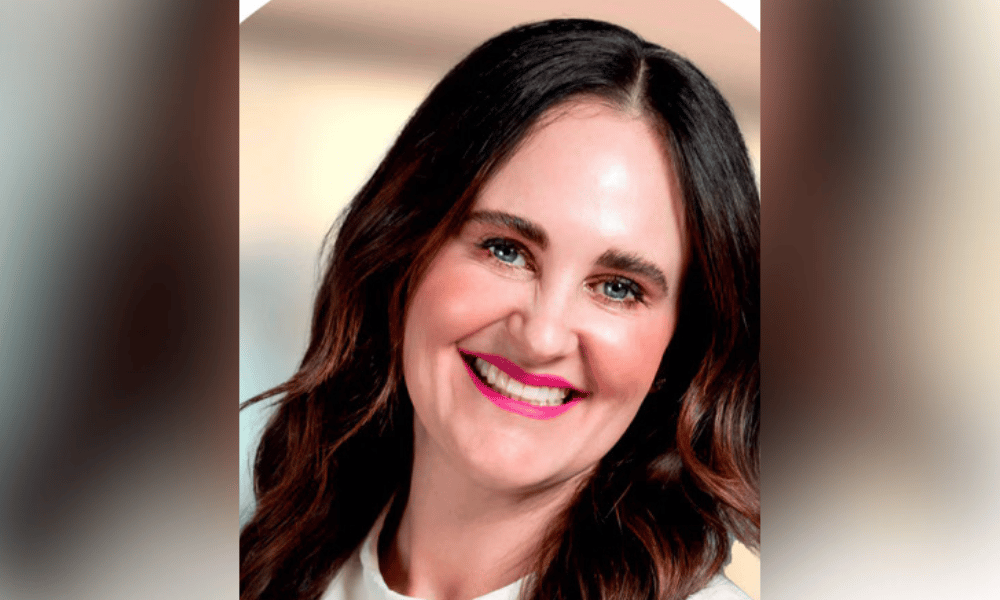
Warren Buffett's announcement in July that he plans to distribute the remainder of his Berkshire Hathaway shares over eight years rather than leave them to an estate has surfaced a question many wealthy families keep deferring: when is the right time to begin transferring wealth?
Sarah Salomon, head of family advisory and philanthropy services at UBS in the US, told WP that the answer is almost always sooner than families think and the cost of waiting is rarely just financial.
"What we think other families can take from this is that waiting to communicate and act comes with a cost," Salomon said. "If the first time the next generation deals with the family's wealth, intentions or decision making is after the wealth creator is gone, the family has missed out on opportunities for learning."
Buffett, she noted, has been making incremental transfers to family-run foundations for two decades. The eight-year pledge is not a departure – it is the continuation of a deliberate philosophy.
"The recent eight-year pledge to distribute his remaining stake emphasizes the idea that responsibility and wealth can be transferred gradually," Salomon said.
Beyond estate planning: the human questions families skip
The dominant frame for most wealth transfer conversations is estate planning and tax efficiency. Salomon argues that framing is necessary but incomplete.
"Estate planning and tax efficiency are essential because they answer the questions of what will be transferred, to whom, through which structures and on what terms," she said. "The missing questions are the human ones: What is the wealth for? What will be expected of the people who receive it? How will siblings or cousins make decisions together?"
Legal documents, she emphasized, can transfer assets and authority. They cannot transfer judgment, communication skills, shared purpose, or the ability to navigate disagreement.
"Wealth transfer is the event, wealth transition is the process, and readiness for responsibility is the outcome," Salomon said. "The mistake is treating the event as though it completes the process."
Philanthropy, in her view, offers the most practical bridge between the technical and human dimensions. Giving together requires a family to articulate its values, explore options, make decisions, deploy capital and learn from outcomes; a rehearsal, in effect, for larger responsibilities to come.
What advisors avoid asking
The conversation financial advisors most often avoid, Salomon said, is asking the wealth creator to define what "ready" actually means. The evasion tends to produce silence, which in her experience, rarely keeps the peace.
"Parents may believe they are protecting their children by not sharing information yet. Adult children may interpret that silence as a lack of trust. Siblings may enter a transition with different views about authority, contribution and fairness," she said.
Salomon is careful to stress that the concept of readiness is not a single threshold and is not determined by age. A family can be ready to share information without being ready to transfer ownership; ready to invite participation without relinquishing control.
"Readiness is a progression from awareness to engagement, from engagement to participation, and ultimately from participation to stewardship," Salomon said. "Information matters, but experience is what develops judgment."
What "not ready" looks like in practice is often quieter than families expect.
"The estate plan is complete, but the family has never discussed it. The next generation has financial education but no meaningful role. Family members are invited to meetings, but the important decisions have already been made," Salomon said. Siblings are expected to act collectively, she added, but no one has defined how collective decisions will occur.
Making philanthropy a real learning tool
When families do try to involve the next generation in philanthropic decisions, Salomon said the most common mistake is inviting them into a structure that has no real room for them.
Parents ask for ideas but keep all decision authority. Children are expected to embrace causes chosen before they were involved. Or a large pool of capital is introduced before the family has established shared language or clear decision criteria.
"What is presented as participation can feel like either a test or a performance," she said. "The point is not to produce perfect grantmakers," Salomon said. "It is to develop judgment, accountability and a constructive way of making decisions together."
On the perennial tension between giving meaningfully now and protecting long-term financial security, Salomon pushed back on the premise.
"Giving and preserving are not competing goals because they are part of one capital conversation," she said.
Different pools of capital can serve different purposes, all guided by a coherent set of objectives.
The advisors and families who navigate this best, Salomon said, are those who have surfaced and tested their assumptions together rather than debated them in theory.
She concluded that the families most at risk are not those lacking sophisticated structures, but the ones that have never had the conversation.