Small firms brace for prolonged uncertainty as Ottawa pushes for relief on steel and auto tariffs
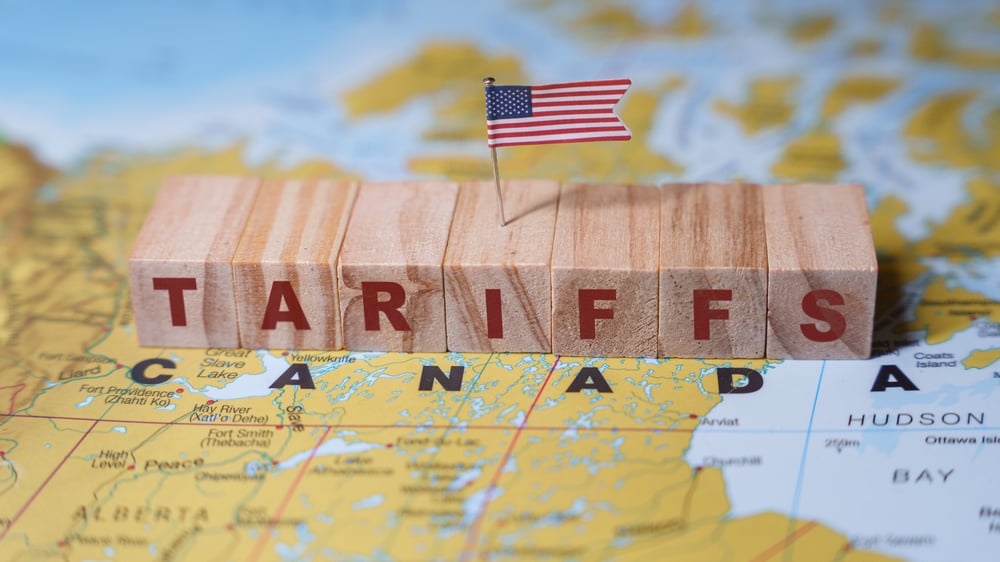
The United States has declined to renew CUSMA in its current form, starting a decade of annual reviews and prolonging the trade uncertainty that Canadian business owners say has already stalled investment decisions.
The move followed a virtual meeting Wednesday among US Trade Representative Jamieson Greer, Canada-US Trade Minister Dominic LeBlanc and Mexican Economy Minister Marcelo Ebrard, and it does not end the deal.
Wednesday marked the deadline for the three countries to say whether they would extend the agreement for a further 16 years, and Washington declined.
The United States "did not agree to renew the USMCA in its current form," Greer said in a statement, so the agreement "is not renewed."
He said Washington will keep working with Mexico and Canada on the deal's shortcomings and its trade deficits with them.
Rather than expiring, CUSMA now stays in force for roughly another decade under yearly reviews that could reopen major parts of the treaty, according to Reuters.
CBC News reported the deal runs to 2036 unless the three countries agree to renew it, and any member can withdraw on six months' notice.
Trade deficits sit at the centre of the US position.
The three economies are deeply integrated, with annual trilateral commerce that CBC News put above US$1.9tn, while Reuters pegged it at about US$1.6tn.
A senior Trump administration official told reporters the president's primary concern is the US trade gap with its neighbours, with goods deficits reaching US$197bn with Mexico and US$48.3bn with Canada in 2025, Reuters reported.
Much of the Canadian shortfall reflects oil imports.
The stakes for Canada are steep.
CUSMA shields close to 90 percent of Canada's exports to the US from the tariffs imposed since US President Donald Trump returned to office, as per CBC News, and Ottawa is pressing for relief on levies covering steel, aluminum, autos and softwood lumber.
Reuters put those sectoral rates at 25 percent on autos, 50 percent on metals and 10 percent on lumber.
LeBlanc said in a statement that for Canada, this includes "substantive discussions" with the United States on sectoral tariffs on Canadian steel, aluminum, autos and lumber.
The three countries agreed on the importance of continuing talks, he added, to support "North American prosperity and competitiveness."
For the business owners caught in between, the drawn-out timeline compounds an already difficult stretch.
Dan Kelly, president of the Canadian Federation of Independent Business (CFIB), said small business owners are frustrated as uncertainty over tariffs and trade delays "real decisions on investment and growth."
Protecting Canada's existing CUSMA exemptions, he said, "must remain government's top priority."
CFIB research found most small firms would rather wait for a better deal than rush one, with 64 percent backing the time needed to secure the best possible terms against 16 percent who would accept a quicker but weaker agreement.
The group also reported that 75 percent of small and medium-sized enterprises said the tariff fight had strained ties with US partners or clients in April 2026, up from 49 percent in March 2025, and that just 40 percent now consider the US a reliable trading partner.
Those strains are reshaping supply chains.
Nearly half of SMEs that trade with the US, 48 percent, have moved to non-US suppliers or customers, according to CFIB, with most turning to the domestic market and smaller shares looking to Asia (40 percent) and the European Union (39 percent).
Kelly cautioned that diversification has limits.
Diversification only goes so far, he said, since business owners will never replace the 340-million-person market on Canada's border.
That, he said, is why a deal has to "hold for years to come" for owners to trust it.
Compliance costs draw a recurring complaint.
Unclear rules of origin and high administrative burdens push some small firms to weigh paying tariffs rather than using CUSMA at all, said Corinne Pohlmann, CFIB executive vice-president of advocacy, who urged Ottawa to include small business voices in the talks and secure "a deal that is clear, accessible and works for businesses of every size."
The road ahead is long.
The US and Mexico will hold a bilateral negotiating round during the week of July 20, Greer said, while Canada and the US have not scheduled their own talks.
Canada's former chief CUSMA negotiator, Steve Verheul, told a BMO event this week that he expects negotiations to run past the US midterm elections this fall and possibly into next year, describing a process focused on bilateral irritants rather than a full rewrite.
Canadian officials have tried to tamp down alarm.
Prime Minister Mark Carney told reporters he expected "a constructive exchange" but "wouldn't expect any drama," while Mexican President Claudia Sheinbaum said the countries could still agree to an extension at any point over the next decade, per CBC News.
The two governments do not read the same way in Washington.
The senior US official said Mexico had been constructive on trade even amid disputes but placed Canada "in a different position," accusing Ottawa of failing to address non-tariff barriers the US has raised, CBC News reported.