Recent poll found 86 of 101 forecasters now expect a quarter-point move on Wednesday
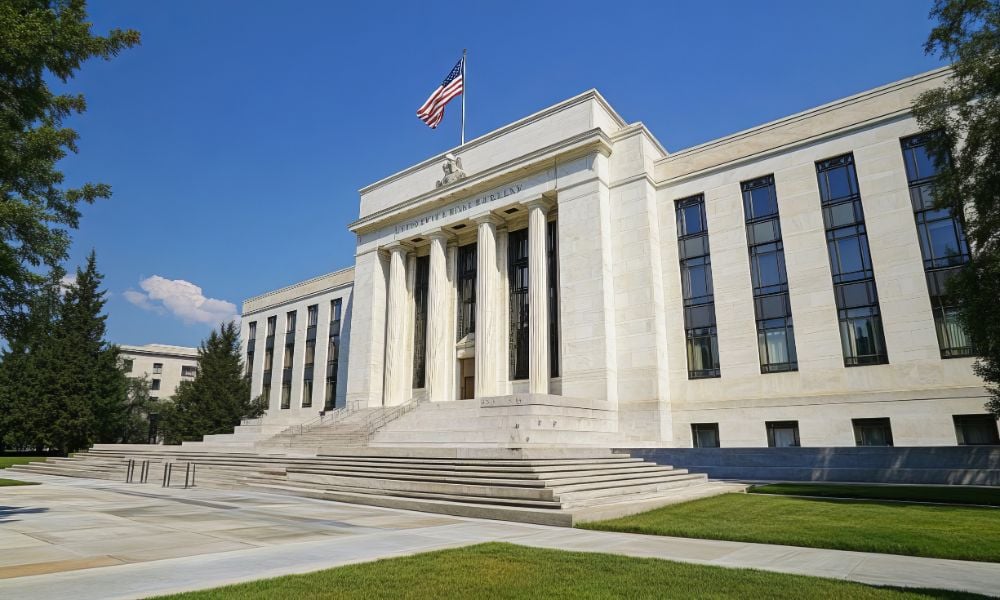
The US Federal Reserve concludes its September policy meeting on Wednesday with interest rate futures pricing close to a 90 percent chance of a quarter-point increase, lifting the federal funds target to a 3.75 percent to 4 percent range.
That would be the first US increase since July 2023.
The US consumer price index rose a seasonally adjusted 0.4 percent in August 2026, putting the 12-month increase at 3.4 percent, the Bureau of Labor Statistics reported on Friday.
A Reuters poll conducted after the inflation report found 86 of 101 economists, an 85 percent majority, expect a quarter-point increase this week.
A week earlier, more than two-thirds of the same survey expected a hold.
Of 70 forecasters, 37 now expect at least one further increase by the end of March 2027, and Reuters reported there is no longer a majority view for lower rates in 2027.
That is a turnaround from earlier in the year, when many economists expected the Fed to stay on hold after a quarter-point cut in December 2025.
Stephen Juneau, a senior US economist at Bank of America, told Reuters that Warsh "boxed himself into where the data needed to be very soft" for the Fed to avoid a hike.
The data did not come in that way and the inflation report landed firmer, he said.
Goldman Sachs, JP Morgan, HSBC and Deutsche Bank all forecast a quarter-point hike, Reuters reported.
HSBC economist Ryan Wang wrote in a note that a "Lack of inflation progress has tipped the balance."
JP Morgan raised its estimate of the long-run US policy rate to 3.25 percent.
Goldman Sachs still expects two US rate cuts in 2027, later than previously forecast, reading this week's expected hike as driven more by market pricing than inflation fundamentals.
"A quarter point may be the opening move, not the final one," Diane Swonk, chief economist at KPMG, told Reuters. "The only durable path to lower borrowing costs is to contain inflation."
The 10-year US Treasury yield hit 5 percent on Monday, Reuters reported, holding near that level despite a US$6bn buyback announcement from US Treasury Secretary Scott Bessent.
When the 10-year topped 4.95 percent last week, its highest since October 2023, the average US 30-year fixed mortgage rate surpassed 7 percent for the first time in over a year, according to CNBC.
US President Donald Trump told reporters at the Irish Open golf tournament on Sunday that the US "should be paying the lowest interest rate in the world" regardless of what Fed data show on inflation and the economy, Reuters reported.
Asked whether he expected a hike, Trump said he did not know, and two weeks earlier he posted on Truth Social that he would stop trading with countries the US runs a deficit with unless rates come down.
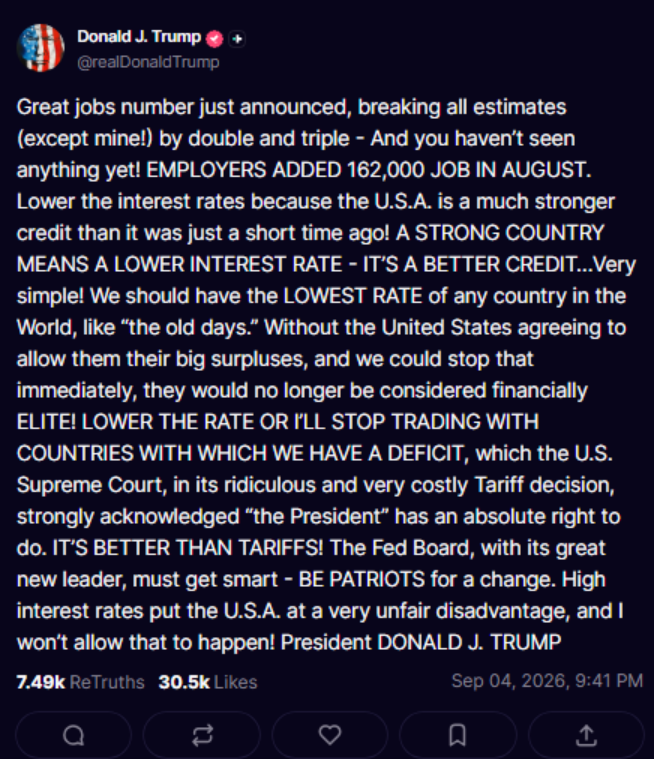
Source: Donald J. Trump @realDonaldTrump via Truth Social
The US levied new tariffs on Canada last week in response to Canadian retaliatory tariffs, CNBC reported, describing them as small by themselves and unlikely to spark broader inflation, though adding to existing price pressures from earlier levies.
National Economic Council Director Kevin Hassett told Fox News Sunday that Trump "will defend the independence of Kevin Warsh above all" regardless of the decision, while adding that if the Fed raises rates, "I'm sure he's not going to be super happy about it."
Warsh has run the Fed's rate-setting committee since May 2026, when Trump encouraged him at a White House swearing-in to be "totally independent," according to Reuters.
The committee held rates steady at its July 2026 meeting.
Maurice Obstfeld, senior fellow at the Peterson Institute for International Economics and former chief economist at the International Monetary Fund, said policymakers cannot avoid one of two costs.
They face either the president's anger or a loss of market credibility, he told Bloomberg, with inflation consequences following later.