One in four savers has parked $25,000 or more instead of investing it

Nearly half of Canadians are keeping money on the sidelines that they could be putting to work, and in many cases the sums run well past pocket change.
A survey conducted and analyzed by Tangerine found that 48 percent of Canadians are holding back available funds rather than investing them, the bank reported, with much of that cash sitting in chequing or savings accounts.
About 24 percent of those setting money aside have parked $25,000 or more, according to Tangerine, and 13 percent have set aside $50,000 or more.
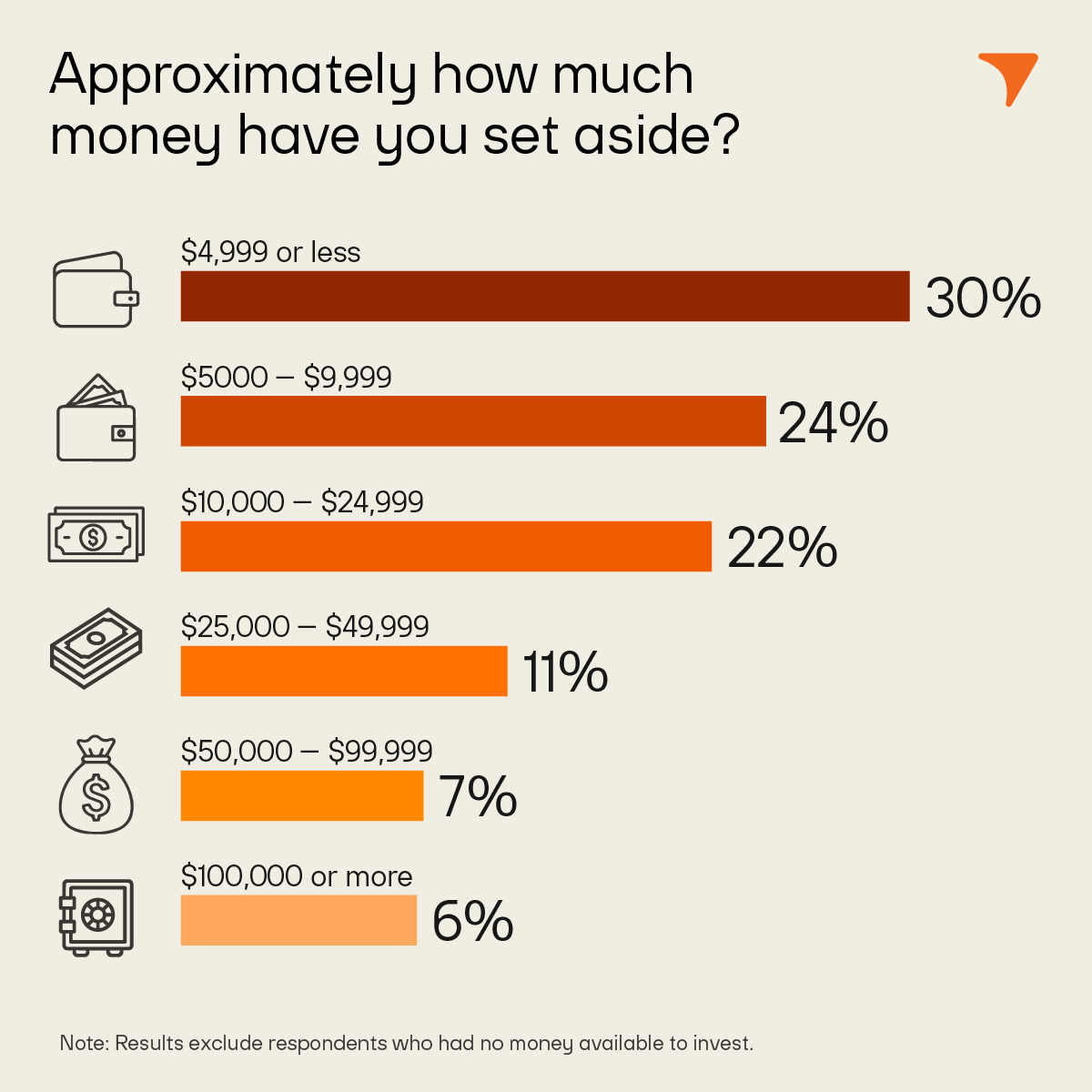
How much money Canadians have set aside. Source: Tangerine survey, March 2026
The behaviour points to a gap between saving and investing rather than an outright rejection of markets.
Among Canadians who had money available to invest, 65 percent set at least some of it aside and 25 percent set aside most or all of it, the survey found, while only 15 percent said they invested all of it.
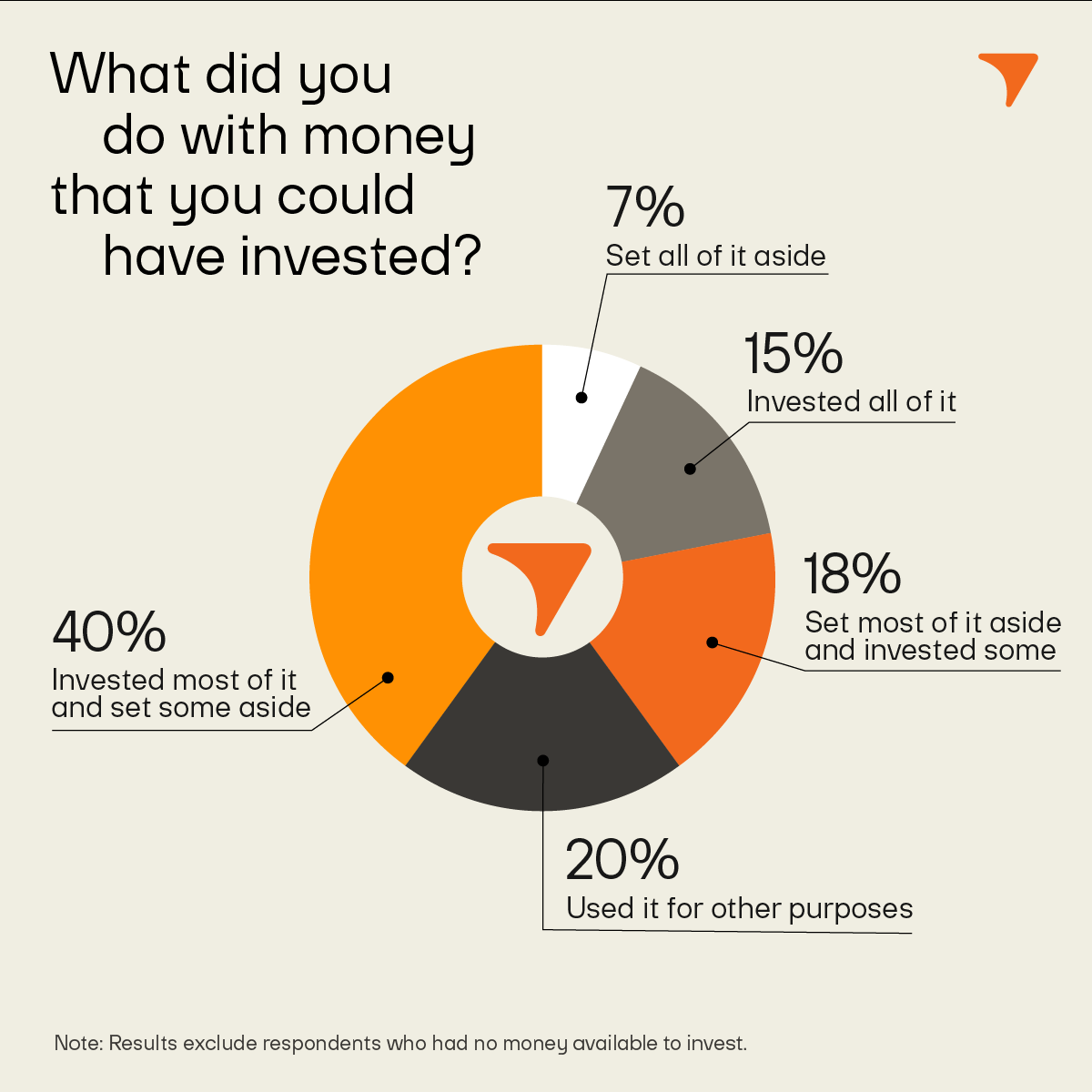
What Canadians did with money they could have invested. Source: Tangerine survey, March 2026
Where that money sits may matter as much as how much of it there is.
Tangerine reported that 36 percent of respondents keep investable money in chequing accounts, while 35 percent hold it in TFSAs and 20 percent in RRSPs without the funds actually being invested.
A registered account avoids market swings, the bank noted, but uninvested cash inside one can miss the longer-term growth of diversified funds.
Caution, not indifference, appears to be driving the hesitation.
About 45 percent of respondents said they may need the money soon, a figure that climbed to 59 percent among those aged 55 to 65, as per the survey.
Among reasons for holding back, 19 percent cited market volatility, 17 percent worried about losing money, and 12 percent felt markets were currently too high.
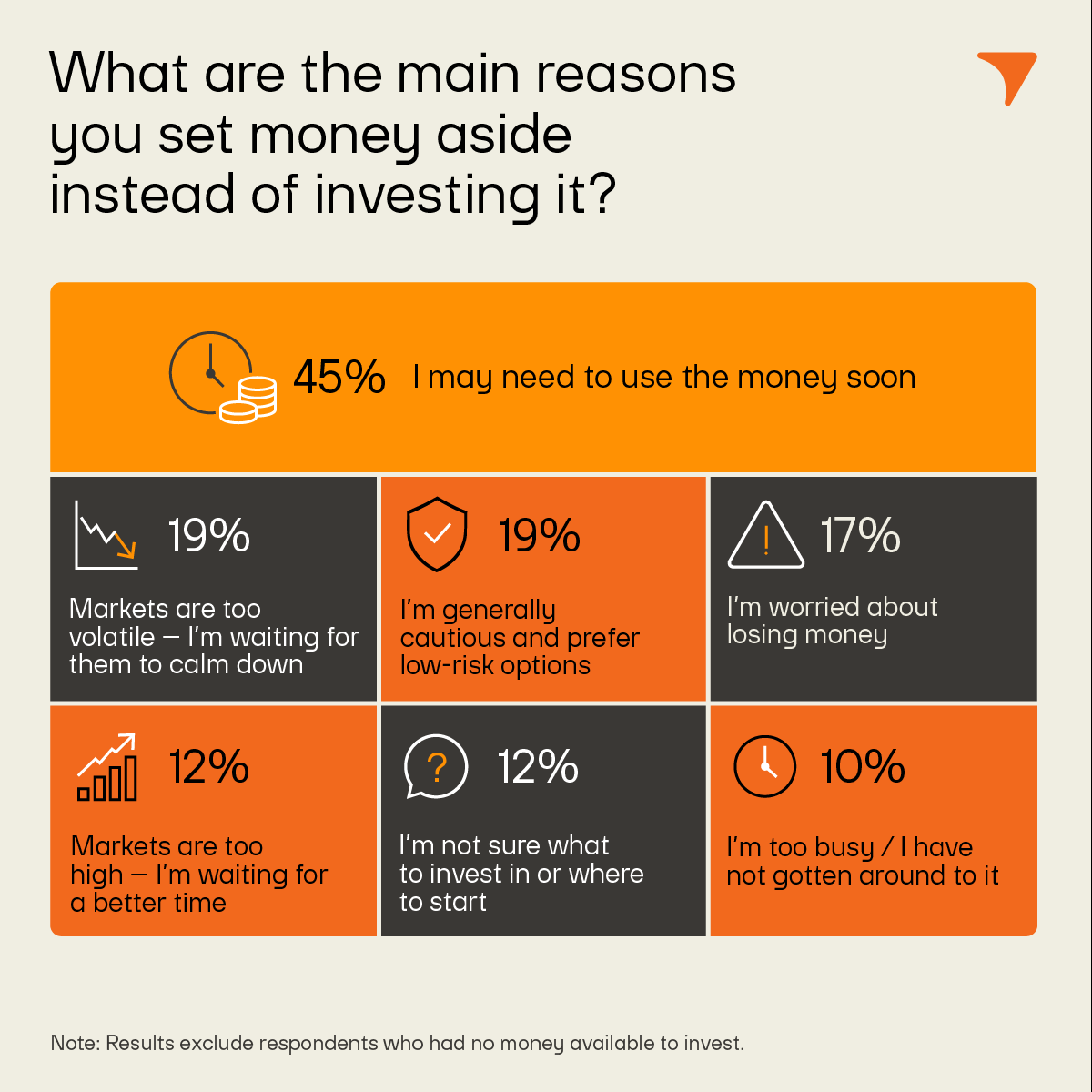
Main reasons Canadians set money aside instead of investing. Source: Tangerine survey, March 2026
"The most common concern I hear from clients is that markets are too high," said Aaron Ayers, a certified financial planner and Tangerine advisor.
He said waiting for a pullback can stretch into months or years, during which markets may keep climbing.
His suggested fix was to start small and stay consistent.
"Regular contributions can help take some of the uncertainty out of the equation," Ayers said.
Confidence varied sharply by age.
Half of respondents (51 percent) said they feel somewhat or very confident making investing decisions but 19 percent of those aged 55 to 65 said they had no confidence at all, compared with 6 percent of 18-to-24-year-olds.
A quarter (25 percent) said they were unsure what to invest in or where to start, against a national average of 12 percent.
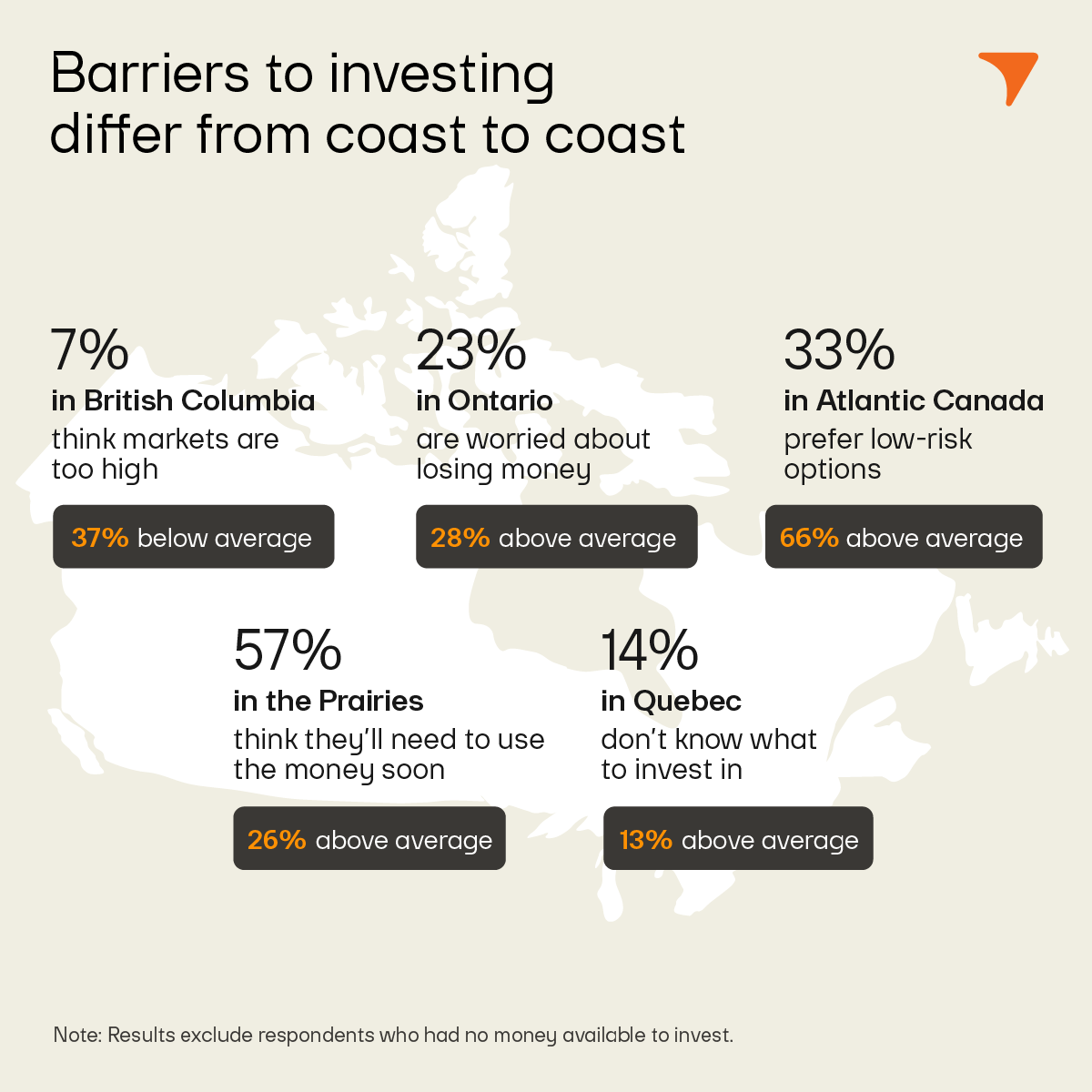
Regional differences also emerged.
According to the survey, 23 percent of Ontario respondents worried about losing money, against 9 percent in British Columbia, where 66 percent had already invested most or all of their available funds compared with 55 percent nationally.
Respondents in Atlantic Canada were more risk averse, with 33 percent favouring low-risk options versus 20 percent overall.
How barriers to investing vary by region. Source: Tangerine survey, March 2026
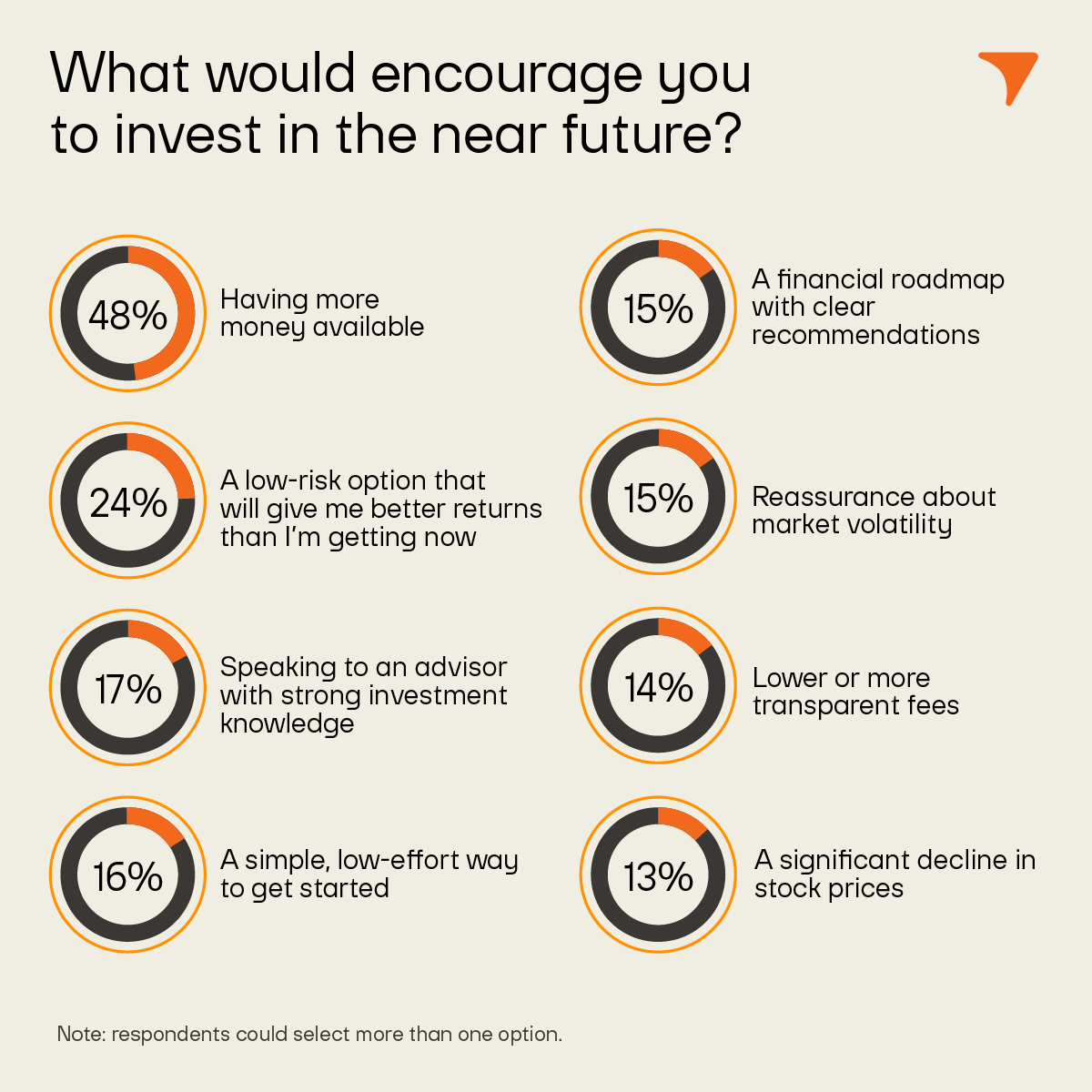
Asked what would move them off the sidelines, 24 percent pointed to a lower-risk option with better returns than they get now while 16 percent wanted a simpler, low-effort way to get started.
Among 18-to-24-year-olds, 26 percent said a financial roadmap with clear recommendations would help.
What would encourage Canadians to invest. Source: Tangerine survey, March 2026