Ontario's top court just drew a line lenders financing development will want to read
Ontario's top court has limited how far construction liens can leap ahead of a building mortgage, handing lenders that finance development a measure of certainty.
In a decision released July 13, 2026, the Court of Appeal for Ontario dismissed an appeal by two suppliers who argued they were owed a larger slice of the money left when an insolvent townhouse project was sold.
The fight centered on holdbacks. Under Ontario's Construction Act, a party paying for construction work must retain ten percent of the price as a holdback to protect lien claimants. When a project goes into insolvency, those liens can outrank a building mortgage, but only to the extent of a shortfall in the required holdback.
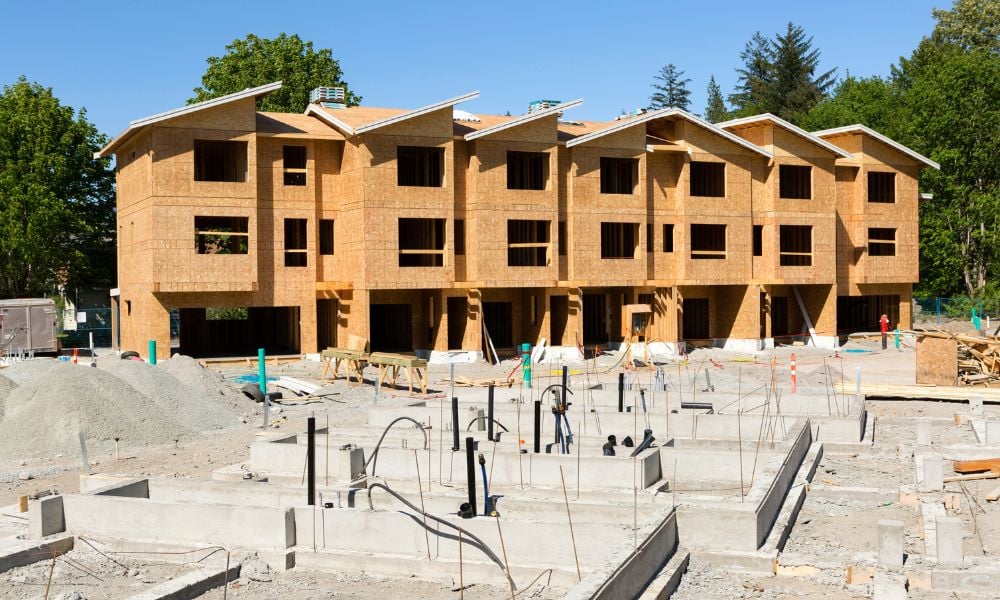
The developer here ran into financial difficulty on a residential townhouse project in Barrie, Ontario, and defaulted on its loan from senior lender KingSett Mortgage Corporation. A receiver was appointed on March 21, 2024, and the project was later sold to homebuilder Dunsire Homes Inc.
The two suppliers had been paid in full on their earlier invoices and only partly on the rest. They argued their priority claim should equal ten percent of everything they invoiced, not just ten percent of what remained unpaid. The purchaser, which stepped into the lender's shoes, said the fully paid invoices should be left out.
The question for the court was whether a holdback shortfall is measured against total invoices or only unpaid ones. It sided with the purchaser. Where invoices have been paid in full and no subcontractor holds a competing lien claim, the court held, there is no shortfall tied to that money, so the priority claim is ten percent of unpaid invoices only.
Reading it the suppliers' way, the court said, would be "commercially absurd" because it would let a contractor collect the same ten percent twice, once when the owner paid the invoice in full and again as a priority claim against the lender.
The panel was careful to limit the ruling. It applies where no subcontractor lien claims exist at the time of the dispute. The result could differ, the court noted, if subcontractors were in the mix.
For the private lenders, mortgage funds, and real estate debt investors that bankroll Canadian development, the message is practical. When a borrower defaults and a project goes into receivership, holdbacks already paid out to a directly contracting supplier will not come back to bite the lender a second time, at least where no subcontractor claims are outstanding. That narrows a source of loss that can eat into recoveries in a receivership.
The appeal was dismissed with costs of $40,000.