New CMHC and RBC data point to a housing market that is stabilizing but not recovering – and the implications for real estate-linked portfolios are worth watching
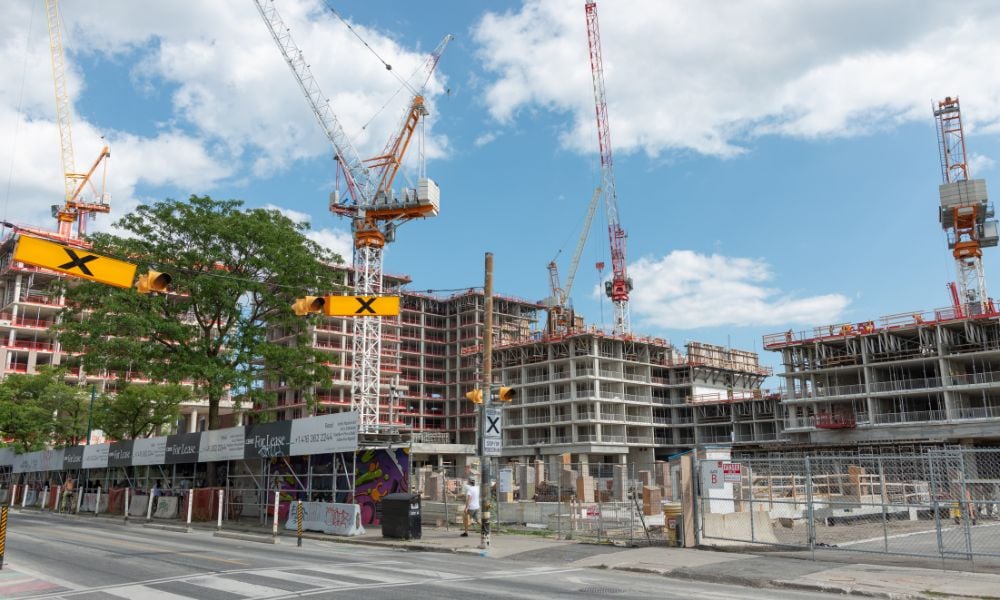
Canada’s housing market is losing momentum heading into the second half of 2026, with new data from the Canada Mortgage and Housing Corporation (CMHC) and Royal Bank of Canada (RBC) pointing to a sector caught between modest gains and persistent headwinds.
CMHC reported on July 16 that the six-month trend in housing starts fell 2.8 percent in June to 248,123 units. Actual monthly starts in centres with a population of 10,000 or more dropped 13 percent year-over-year, with 20,265 units recorded compared to 23,292 in June 2025.
The year-to-date total of 113,017 starts is down 1 percent from the same period in 2025. CMHC’s own economists do not expect a meaningful reversal before year’s end.
“There is little doubt that the slowdown reflects rising uncertainty, higher development costs, weaker demand and more unsold homes,” said Kevin Hughes, Deputy Chief Economist with CMHC. “We expect that this environment will continue to hold back new housing construction in Canada over the short-to-medium term and drive 2026 actual housing starts below last year’s levels.”
Supply building, demand hesitating
The number of units under construction in larger centres edged up 0.2 percent month-over-month to 375,469 in June. Completions rose 8.4 percent compared to May, reaching 18,298 units. Approved units awaiting construction fell 1.1 percent to 137,324.
That combination – more completions but fewer new projects in the queue – points to a gradual thinning of the supply pipeline. For advisors tracking Canadian real estate investment trusts and income-generating real estate assets, that shift carries implications for the multifamily segment, which has been the most active part of the market.
Regional splits were notable. Toronto posted a 25 percent year-over-year rise in June starts, driven by higher multi-unit activity. Vancouver recorded a 35 percent decrease, with both multi-unit and single-detached starts lower. Montreal posted a 10 percent gain.
CMHC, June 2026
Housing starts: year-over-year change, June 2026
Selected census metropolitan areas — actual monthly starts
Source: Canada Mortgage and Housing Corporation (CMHC), Starts and Completions Survey, June 2026
Resale market struggling to gain traction
On the resale side, RBC’s July 2026 Monthly Housing Market Update described the market as taking another “small step” toward recovery, but stressed it was barely holding.
RBC assistant chief economist Robert Hogue noted that home resales rose 0.5 percent in June from May, extending a three-month run of gains. That follows a 5.5 percent advance in May. When seasonally adjusted and annualised, total transactions were 12 percent below the 10-year average.
“There’s a long road ahead in the recovery,” Hogue wrote.
The Canadian Real Estate Association (CREA) revised its 2026 forecast downward on July 15, now projecting 463,336 residential properties to change hands this year. That represents a 1.4 percent decline from 2025, a reversal from an April forecast that had called for a modest annual gain.
The national average home price is forecast to rise 1.1 percent to $686,710, roughly $2,000 lower than the spring estimate.
What it means for client portfolios
The data is relevant to advisors with client exposure to Canadian real estate as an asset class, whether through direct ownership, REITs, or mortgage-backed instruments.
RBC’s report points to a buyer pool that remains hesitant. Weak economic confidence, uncertain job prospects, and affordability concerns are keeping prospective buyers on the sidelines. Inventory has shown signs of stabilizing in Ontario and British Columbia, where active listings hit decade-long highs in 2025.
“Seller competition is beginning to ease as a result in some softer markets,” Hogue wrote. He noted signs that the balance of negotiating power is steadying home values in parts of Southern Ontario, including the Greater Toronto Area.
Outside Ontario, the picture is mixed. Saskatchewan, Manitoba, Quebec, and parts of Atlantic Canada are seeing prices hold or appreciate, reflecting tighter supply-demand conditions. British Columbia is seeing pressure from both the supply and demand sides at the same time. It’s an unusual dynamic that warrants attention for clients with concentrated exposure in that market.
RBC outlined the conditions needed for a broader recovery: lower prices in some areas, improving affordability, and better job prospects gradually drawing sidelined buyers back in. But the bank also flagged meaningful downside risks, including geopolitical disruption, an energy price spike, or a deterioration in the labour market.
For advisors managing clients with real estate-heavy portfolios, understanding what drives housing starts and construction activity matters beyond the residential market itself. Construction slowdowns ripple into broader economic output, employment data, and the financial health of developers whose debt is held across fixed income portfolios.