The tech giant will fully fund power and grid infrastructure for a site drawing power equal to 800,000 homes
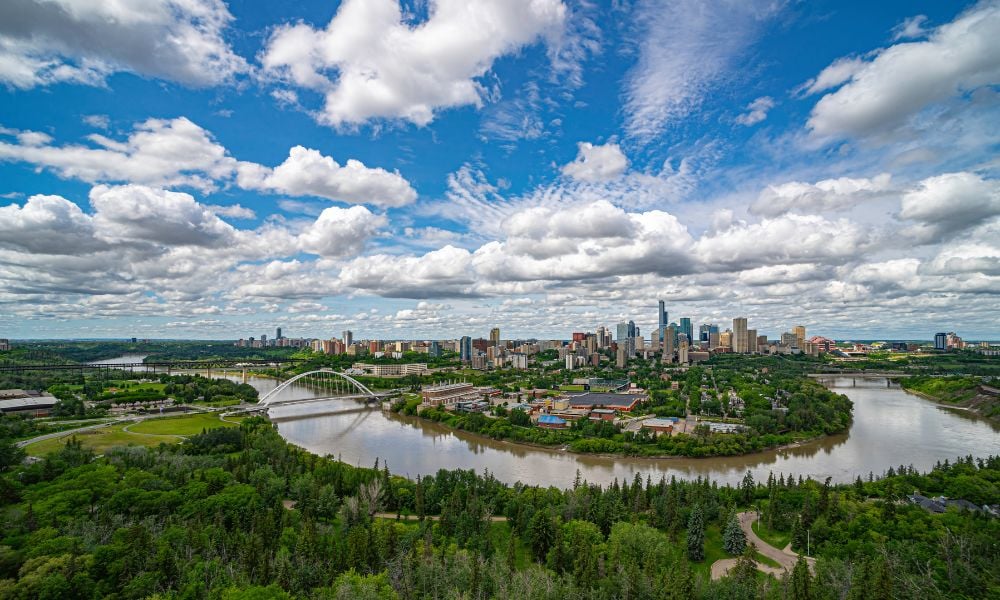
Meta will invest $13bn to build its first Canadian data centre northeast of Edmonton, a project that channels fresh demand toward a cluster of Alberta energy and infrastructure firms and extends the tech giant's costly push to expand artificial intelligence capacity.
The one-gigawatt facility in Sturgeon County, which Meta said it can scale to 1.8 gigawatts, will cost about US$9.17bn and take two to three years to build, according to Reuters.
AP News reported it will be Meta's largest data centre outside the United States, and the company said it is its 33rd worldwide.
For investors, the buildout spreads across several Canadian-listed players.
Calgary-based Pembina Pipeline, Morgan Stanley Infrastructure Partners and Kineticor Asset Management will proceed with the 932-megawatt Greenlight Electricity Centre in Sturgeon County, with Meta named Wednesday as its customer.
The plant is expected to start up in the second half of 2030.
Until then, and for the following decade, Capital Power will supply 250 megawatts from its existing natural gas fleet, according to Reuters, which said the Greenlight project will need roughly 150 million cubic feet of natural gas a day, adding demand for Western Canadian producers.
The Alberta commitment lands as Meta pours money into AI.
The Facebook and Instagram parent has guided to as much as US$145bn in capital spending this year, CNBC reported, a forecast that has drawn investor skepticism.
Meta's shares have fallen about 9 percent in 2026 while the Nasdaq has gained 11 percent, the network said, and the company is building a cloud-computing business that could sell spare capacity or access to its AI models as it competes with Alphabet, Microsoft and Amazon.
According to Reuters, Alberta has courted Silicon Valley for years, betting on natural gas that trades at a steep discount to the US benchmark and a cold climate that lowers cooling costs.
Meta said it will fully fund new generation and grid infrastructure for the site, which will draw about as much electricity as 800,000 homes.
Last fall the province passed legislation letting data centres generate their own power, CBC News reported.
"This is the first of its kind... but it won't be the last," Alberta's technology and innovation minister, Nate Glubish, told reporters, according to Reuters.
He said more projects would follow.
Alberta Premier Danielle Smith said the project would generate at least $250m a year for the province, CBC News reported.
Meta put construction employment at more than 3,000 workers at peak and about 300 permanent positions once the centre operates.
The broadcaster said Meta also pledged tens of millions for local roads and water systems, a figure it put at $60m and that AP News reported as US$42m.
Addressing a frequent objection to data centres, Meta's vice-president of data centre strategy and development, Gary Demasi, said the Sturgeon County site will use a closed-loop cooling system that avoids drawing local water.
"To put that into perspective, our annual water use is actually less than a typical Alberta golf course," he said at the news conference, according to CBC News.
Not everyone backs the approach.
Keith Stewart of Greenpeace Canada called for limits on such projects, telling Reuters, "We need a moratorium on mega-data centers until we have legislated environmental and human rights protections on AI."
David Pickup, director of the Pembina Institute's electricity program, said the province's policy favours natural gas over cheaper low-carbon options and could push up power prices.
"It's going to have an impact on Albertans and that's something that we're really concerned about," he told CBC News.
Those concerns carry weight in Alberta, where the grid runs about 60 percent on natural gas and its emissions intensity is nearly five times the national average, according to Reuters.
Ottawa released an AI strategy last month suggesting new data centre growth would tap the country's largely clean electricity grid, the wire service reported, yet most projects now in planning sit in Alberta.