Holistic wealth management means putting the right people in the room

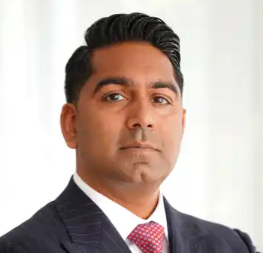
When I entered the industry in 2008, the traditional model was much more investment centric. An advisor managed the portfolio; an accountant** prepared the tax return, a lawyer** or notary** handled legal matters, and a mortgage professional** arranged financing. The professionals often knew each other only because the client happened to introduce them.
For families with $10 million to $100 million in net worth today, that model is no longer sufficient. They need a holistic wealth management team.
The families we serve at RR Wealth Management are often dealing with complexity rather than simply asking, “Which investment should I buy?” The real question is increasingly: How do all the pieces of our financial life work together? That is the biggest change I have seen since 2008. We have moved from managing portfolios in isolation toward coordinating financial lives.
What a holistic wealth management team looks like
A truly holistic advisory team starts with the client and then brings together the right specialists around the family’s objectives. Depending on the situation, that can include the portfolio manager or wealth advisor, accountant** and tax specialist**, notary**, lawyer** where appropriate, mortgage planner**, insurance specialist**, corporate advisors** and, increasingly, professionals involved in business succession and family governance.
The important distinction is that these professionals should not simply be a collection of names on a referral list. They need to communicate.
A family may have substantial investment assets, a privately held business, multiple real estate properties, corporate investment accounts, debt, children who will eventually inherit wealth and assets in more than one province or country. A decision in one area can affect everything else. Corporate restructuring may affect the investment strategy. A real estate transaction may change liquidity requirements. An estate plan may influence how assets should be owned. A financing decision can affect both cash flow and investment risk.
My role is not to replace the accountant**, notary**, or mortgage planner**. My role is to help ensure that the financial implications of major decisions are visible and that the right professionals are speaking to one another, with the client’s authorization.
Quebec requires a different mindset
In Quebec, notaries** play a central role in many aspects of a family’s financial and legal life. They may be involved in notarial wills and protection mandates, marriage and family matters, real estate transactions and estate planning. Because Quebec operates under a civil law system, ownership structures, matrimonial regimes and succession issues can require analysis that is specific to Quebec law.
For me, the relationship with the notary** is very coordinated. If a client is buying or selling a significant property, updating an estate plan, dealing with family changes or considering how assets should pass to the next generation, I want, with the client’s consent, to ensure that the financial picture and the legal documentation are aligned.
The key lesson for advisors outside Quebec is this: do not assume that your standard estate-planning or property-planning approach automatically transfers across provincial borders. If a client has a residence, business interest, family member or estate connection in Quebec, bring Quebec-qualified professionals into the discussion from the outset. It is much easier to coordinate planning at the beginning than to correct documentation or ownership structures later.
The advisor’s job is to recognize when a Quebec-specific issue exists and make sure the appropriate legal professional is involved. Just as important, we should never provide legal advice ourselves.
Debt and taxes belong in the conversation
One example involved a family with significant investable assets, real estate holdings, and a privately held business. The initial issue appeared straightforward… the family was considering selling investments to raise capital for a major real estate and business opportunity.
But when we looked at the broader picture, selling the investments immediately was only one possible solution, and potentially an expensive one from a tax and long-term portfolio perspective.
The first step was to clarify the family’s objectives. How much capital is required? Was the need temporary or permanent? What are the cash-flow implications? What are the tax consequences of selling assets? And how much leverage was appropriate given to the family’s overall balance sheet?
I coordinated the financial analysis because I had the broadest view of the client’s investments, liquidity, and long-term financial plan. The accountant** analyzed the tax implications and corporate structure. The mortgage planner** examined financing options, debt servicing, and available lending structures.
We did not approach it as three professionals independently giving three opinions. We created a shared framework, with the client’s authorization, and made sure everyone was working from the same information. The outcome was a more thoughtful strategy that considered liquidity, taxation, financing costs and investment risk together, rather than treating the financing decision in isolation.
I am not the accountant**, and I am not the mortgage planner**. But I do not believe an advisor should say, “Debt and taxes are outside my lane,” and then ignore them. They may be outside my professional authority to advise on independently, but they are absolutely relevant to the client’s financial plan.
In cases like this, there may be an initial strategy meeting, follow-up discussions while the professionals complete their analysis and a final implementation meeting. After that, the team reconnects whenever there is a significant change. The client should not have to act as the messenger between their accountant**, mortgage planner** and wealth advisor.
Vetting, disclosure and accountability
This is an area where I believe advisors need to be extremely disciplined.
Before introducing a client to a notary**, accountant** or mortgage planner**, I consider their professional qualifications, licensing, relevant experience, reputation, specialization and whether their expertise genuinely fits the client’s particular situation. I also believe it is important to give the client options and let them decide who they are most comfortable with. Sometimes that has nothing to do with professional qualifications and everything to do with personality and common ground.
Regarding the Client Focused Reforms from the Canadian Securities Administrators, my preference is to focus on professional collaboration rather than a referral-fee culture. If there is any arrangement that could create a conflict, it must be handled through the appropriate firm and compliance processes, with the necessary disclosure and documentation.
Confidentiality is extremely important. I do not simply circulate client information among professionals. Information should only be shared with the client’s knowledge and authorization, and each professional remains responsible for complying with their own confidentiality and privacy obligations.
Accountability also needs to be clear. A notary** is responsible for notarial advice and documentation. An accountant** is responsible for accounting and tax advice. A mortgage professional** is responsible for their area of expertise. My responsibility is not to guarantee their work, but I do believe I have a responsibility to pay attention. If a client raises a concern about someone I introduced, I take it seriously. I want to understand what happened, ensure the client knows their options, and determine whether that professional should remain part of my network.
A professional relationship should be cultivated, respected, and continuously earned. It is not permanent simply because someone was useful five years ago.
Build an elite team, not a referral network
The biggest mistake advisors make is building a large referral network instead of an elite professional team. There is a big difference.
A referral network can become transactional: “I send you clients; you send me clients.” That may generate business in the short term, but it does not necessarily improve the client's outcome. A professional team is built around complementary expertise and mutual respect. You need people who are willing to have difficult conversations, challenge assumptions, and collaborate when the client’s situation requires it.
I have written about why collaboration matters more than referrals in wealth management, because clients can tell the difference. They know when professionals are genuinely working together for their benefit, and when everyone is simply trying to exchange deals, commissions, and money.
If a newer advisor started tomorrow, I would tell them to begin with an accountant** or tax professional**. Tax considerations touch almost every major financial decision for affluent clients, from investment sales and corporate structures to business succession, real estate, retirement and estate planning. That does not mean the advisor should give tax advice. It means learning to recognize when a decision has tax consequences and knowing when to bring the right professional into the conversation.
From there, build relationships with an experienced notary** or estate professional** familiar with corporate structures and tax law, as well as a mortgage planner**. Over time, grow a broader professional network around your practice based on the needs of the clients you serve.
My advice to younger advisors is simple… do not collect business cards and transactions. Build relationships and focus on trust and respect. Get to know how each professional thinks. Understand their expertise, their strengths, and their weaknesses. Watch how they communicate with clients and learn whether they are responsive when a complex issue arises.
The best professional relationships are not measured by how many referrals change hands or how much money you can make. They are measured by whether, when a client has a complicated problem, you can put the right people in the room and collectively help that client make a better decision. Especially when there is nothing in it for you!
If you want longevity and success in this business, the client always comes first. That, to me, is what holistic wealth management should look like.
This information has been prepared by Richard Rampersad who is a Portfolio Manager for iA Private Wealth Inc. and does not necessarily reflect the opinion of iA Private Wealth. The information contained in this newsletter comes from sources we believe reliable, but we cannot guarantee its accuracy or reliability. The opinions expressed are based on an analysis and interpretation dating from the date of publication and are subject to change without notice. Furthermore, they do not constitute an offer or solicitation to buy or sell any of the securities mentioned. The information contained herein may not apply to all types of investors. iA Private Wealth Inc. is a member of the Canadian Investor Protection Fund and the Canadian Investment Regulatory Organization. iA Private Wealth is a trademark and a business name under which iA Private Wealth Inc. operates.
**Products and services provided by third parties, including by way of referral, are fully independent of those provided by iA Private Wealth Inc. Products offered directly through iA Private Wealth Inc. are covered by the Canadian Investor Protection Fund, subject to exception. iA Private Wealth Inc. does not warrant the quality, reliability or accuracy of the products or services of third parties. Please speak to your advisor if you have any questions.
**Insurance products and services are offered through 9515712 Canada Inc., an independent and separate company from iA Private Wealth Inc. Only products and services offered through iA Private Wealth Inc. are covered by the Canadian Investor Protection Fund.