Tim Pickering unpacks what droughts, wildfires, storms, and key crop failures could mean for commodities investors
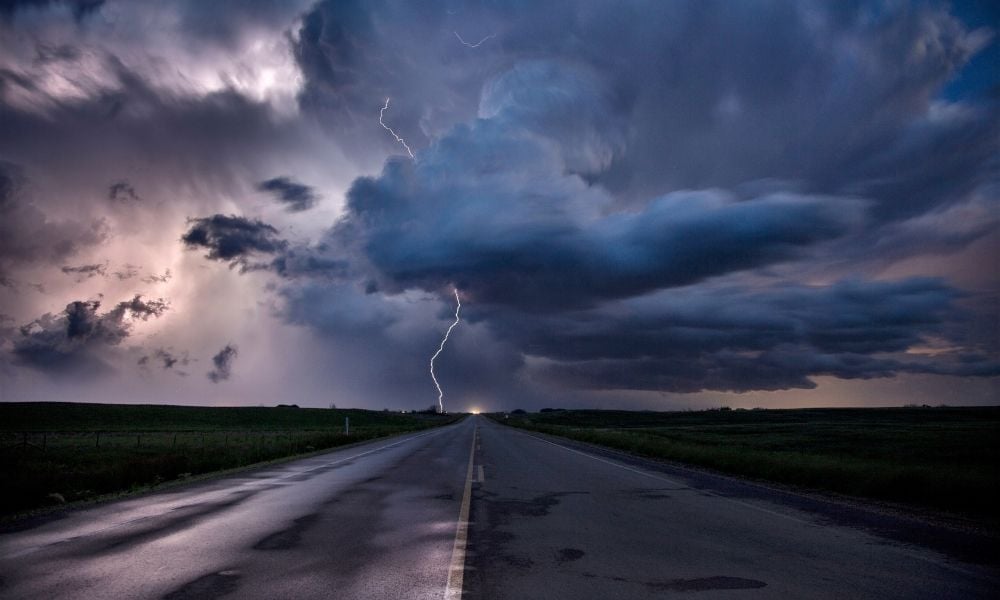
Extreme weather events are becoming a financial reality that insurers, investors, and governments now must contend with. According to the United States National Centers for Environmental Information, there were five disaster events that cost more than one billion dollars (CPI adjusted) in the year 2000 in the United States. In 2024 there were 27. The five-year average costs of natural disasters and extreme weather in the US has risen from $23.8 billion (USD) at the start of this century to $149.3 billion (USD) in 2024. A recent report from Statistics Canada found that Canadian home and mortgage insurance premiums increased by 45 per cent in the past six years, attributing costs associated with extreme weather events as a significant cause of this increase. In 2024, for example, catastrophic claims hit a record of $8.6 billion (CAD) in Canada.
Tim Pickering, Founder, CIO, and President of Auspice Capital Advisors, posits that extreme weather events have been a reality throughout human history. Nevertheless, as a commodities specialist, he acknowledges that many of the recent extreme weather events we’ve seen around the world can have huge impacts on commodity markets. That is especially true of agricultural commodities like grain, which Pickering identified as one of the three core commodities sectors that could see major change this year.
“The outlook we put out starting this year was focused on 3 core sectors. We felt that AI and electrification was a game changer. We felt deglobalization was a game changer. And then we also felt that something was forgotten, and that was [agriculture] and grains. We thought they were really askew with the long-term fundamentals, but even more so the value of land,” Pickering says. “When I look at the supply and demand factors, they haven’t really improved. Logistics are a huge problem. Arable land is actually arguably deteriorating because of weather phenomenon. And what it does is it puts more pressure on concentrated producing areas.”
The Cantillon effect, the Panama Canal, and Russia
While Pickering notes that grain prices began to rise in Q1 as he had initially predicted, the sudden onset of the US-Israeli war with Iran and the closure of the Strait of Hormuz shifted commodity investment capital to a focus on hydrocarbons. It’s an example, Pickering says, of the Cantillon effect: the idea that new money preferences certain assets over others. A focus on energy markets resulted in a wider neglecting of agricultural commodities. That was compounded by Russian grain hitting global markets as the world’s largest country sought agricultural revenues to finance its war with Ukraine.
Cracks are beginning to show in those grain markets, however, in part due to significant weather events. Low water levels in Gatun Lake in the centre of the Panama Canal have made shipping through that waterway more challenging and expensive, meaning key agricultural goods and agricultural inputs like fertilizers have been more constrained.
There are factors beyond weather, too, including the geopolitical tensions choking off the Strait of Hormuz. Gulf states are key fertilizer producers and much was made of constrained supply in February and March when the war began. That hasn’t shifted global agricultural prices as much as initially speculated, however, due to other sources of fertilizer and the timing of the war’s outbreak relative to planting and harvest seasons in the countries that rely on fertilizers from Gulf states. As time passes, however, some of those shortages will continue to show themselves.
Soft commodities and positioning for shortages
While grain prices have larger macro drivers pointing to price increases, Pickering notes that the simple fact that there is a large amount of global arable land for grain can keep those price swings moderated, especially when ‘swing producers’ like Russia end up on the scene. Agricultural commodities with more limited growing regions, especially regions more subject to extreme weather events like hurricanes and drought, can see greater price volatility. Coffee, cocoa, and sugar are all more susceptible to extreme weather, Pickering says. Coffee is the most recent example, with a big price movement in July. He notes that these commodities already come with high demand and tight supply, meaning that every little event that could impact production results in a big pop in their futures markets.
As a commodities manager, Pickering says that the approach at Auspice is to remain agnostic. Auspice operates long strategies looking for these upward movements in commodity prices and long-short strategies that can take opportunities from outlier moves, depending on the applicable investment mandate. He says that there is a “wheel of factors” that can impact commodities, with weather just being one of many forces. Managers like Auspice wait for the next factor to make itself known, looking at price and volatility, using a spike in price volatility as a signal to move into a position.
“How did we participate in coffee at the beginning of July? It looked pretty soft, and then all of a sudden it started to tick up, and it looked like an outlier move. We got long within a week. We were already cutting our risk because volatility had exploded. And so, we’re taking our money off the table because we don’t know how long that event’s going to last. And if volatility goes up, the probability of keeping our mark-to-market gains is diminishing,” Pickering says. “The point of all this: you have to remain nimble, available. You have to have capital ready to go and really focus on what the price is telling you as opposed to what the common narrative is.”