The firm’s Head of Gold Commodities Fund Strategy talks to WP
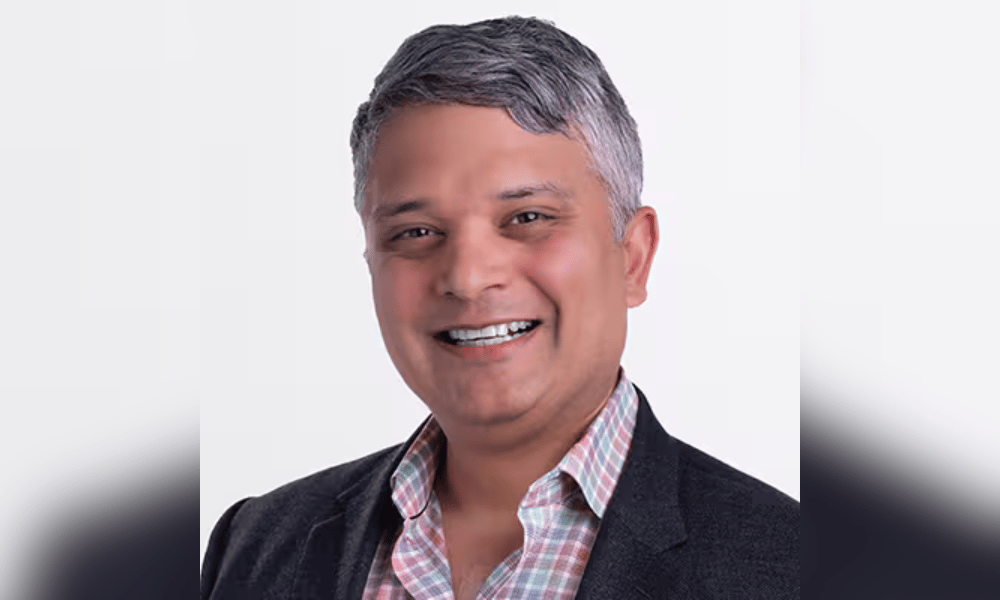
Gold may face near-term pressure from rising oil prices and energy-driven inflation risks, but the broader structural backdrop for bullion remains supportive, according to Aakash Doshi, Head of Gold Commodities Fund Strategy at State Street Investment Management.
Doshi told WP that investors should understand how energy markets feed into inflation expectations, interest rates and currency dynamics when assessing gold’s short-term outlook.
“Energy prices – particularly crude oil prices – are direct inputs impacting headline CPI and inflation breakevens in the bond market,” he said. “How does that weigh on gold? An oil price spike of 20, 30, or even 50% in this case could be a headwind for the yellow metal via the Fed policy and interest rate channel, giving the central bank less wiggle room to cut rates due to the inflationary risk.”
Doshi noted that crude oil also feeds through broader producer and consumer prices across the economy.
“Crude oil also impacts producer prices that feed down to consumers,” he said. “Petroleum products derived from crude oil, such as gasoline, diesel, jet fuel, fuel oil, heating oil, bunker fuel, condensate, etc. are critical to transportation, industrial, and utility sectors among many others.”
Because energy demand tends to be highly inelastic in the short run, he said prices may need to remain elevated before demand destruction occurs and markets rebalance.
“This energy ‘shock’ can have knock-on effects on boosting the US dollar, especially as the US has grown as an energy producer and exporter, which is a potential headwind for gold via denomination effects,” Doshi said.
Structural concerns continue to support bullion
Despite those short-term pressures, Doshi argued that geopolitical conflict and oil-driven volatility ultimately reinforce many of the longer-term themes supporting gold’s broader bull cycle.
“The military conflict arguably exacerbates some of the structural factors that have buttressed the bullion bull cycle since late 2023, including geopolitical fragmentation, a sticky inflation impulse, and rising government debt loads,” he said.
Doshi pointed to worsening US fiscal dynamics as one of the key structural concerns underpinning investor demand for gold.
“Indeed, the Congressional Budget Office projects net interest payments on the US federal debt will exceed $1T this year for the first time in history, and that was before the recent war spending and back-up in US Treasury yields,” he said.
“The CBO also anticipates net interest payments will more than double by 2036 to $2.1T per annum, with debt servicing costs a primary driver of widening US deficits.”
According to Doshi, those debt dynamics could increasingly push investors toward gold as a monetary hedge.
“This could drive demand for gold amid debasement fears and diminishing purchasing power of the USD over time,” he said.
Asian demand increasingly shaping price discovery
While Western ETF flows remain important to gold markets, Doshi said investors should pay closer attention to the growing influence of Asian demand, particularly from China and India.
“Asia, particularly China and India, have long been the centers for physical gold demand,” he said. “However, as their consumption shifts from merely jewelry towards investment demand, there is a case to be made that the East is important to determine price discovery.”
Doshi stressed that gold should not be viewed solely through the lens of US monetary policy or equity market volatility.
“In short, gold is a global fungible commodity,” he said. “It is more than just a reaction to the Fed or equity market volatility.”
He added that recent trading patterns increasingly point toward Asia’s growing role in driving returns.
“Our analysis of high frequency price data suggest that at least in 2026, most of the gold market gains have come during Asia trading sessions and due to Asian demand on the ETF side,” Doshi said.
China’s role becoming increasingly important
Although strong Chinese bullion demand has helped support prices, Doshi does not believe a full decoupling is emerging between physical and financial gold markets.
“I don’t see a decoupling per se but I see the importance for Western financial investors to understand the role Asia—particularly China—increasingly plays in the gold market,” he said. “This is true at the PBOC (Chinese central bank) and retail consumer level in mainland China.”
Doshi also said traditional relationships between gold and real interest rates have evolved in recent years.
“Bullion still has a general inverse relationship to real interest rates but that linkage has weakened since mid-2021 though it did reemerge in 2025,” he said. “I think the sharp recovery in Chinese consumption post-pandemic and record official sector gold purchases from 2022-2024 really helped break the traditional gold-RY model.”
Gold remains a geopolitical hedge
As geopolitical tensions persist and concerns around potential triple-digit oil prices continue, Doshi said gold still retains its role as a traditional safe-haven asset.
“Gold is still a traditional safe-haven asset! And a hedge against geopolitical fragmentation, in my view,” he said.
He argued that recent weakness in gold prices was driven more by monetary policy repricing and liquidity pressures than by any erosion in gold’s defensive characteristics.
“I think the March swoon was more directly a function of Fed re-pricing, a rebounding US dollar, and a lot of use of gold as a liquidity squeeze/profit-taking vehicle in a period of uncertainty,” Doshi said.
Looking ahead, Doshi said several indicators will be important in determining whether gold’s broader bull cycle remains intact over the next six to 12 months.
“US listed gold ETF fund flows rebounding from the March redemption. That has been the case in April so far,” he said.
He also pointed to “ongoing demand from China retail and the PBOC” as another critical support factor for the market.
Finally, Doshi said worsening fiscal conditions globally would likely strengthen the long-term case for gold ownership.
“If the US and global debt/deficit situation worsens, I think that provides a structural case for alternative fiat demand (e.g. gold as a monetary hedge),” he said.