New launch law and Nova Scotia spaceport cut US reliance, draw fresh capital
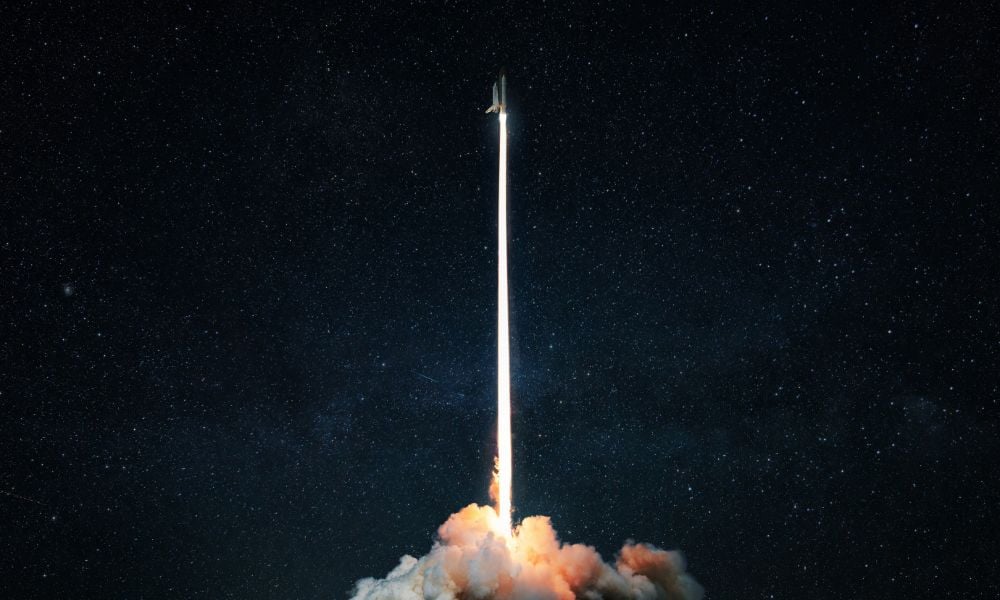
Canada is racing to build a “sovereign way to space” that officials say could unlock a $40bn commercial industry and cut the country’s reliance on US rockets and regulation.
According to Reuters, the federal government has unveiled draft legislation that would let Ottawa regulate and oversee commercial space launches and re‑entries from Canadian soil, ending Canada’s status as the only G7 nation without launch capabilities.
Government officials said the bill is designed to support investment and infrastructure development while reducing dependence on the United States.
CBC News reported that Transport Minister Steven MacKinnon introduced the Canadian Space Launch Act, or C‑28, which he said would give Canada its own “sovereign way to space.”
He told MPs that Canada is the only G7 country without domestic space launch capabilities and now depends mainly on the US to put Canadian satellites into orbit.
He said this dependence discourages investment, causes costly delays and hands control of “critical infrastructure” to foreign space programs.
As per CBC News, the act would allow Canada “to create and implement a modern regulatory framework” for homegrown launches and re‑entries, including a financial responsibility and indemnification framework plus safety and security requirements.
MacKinnon said “we could create a commercial space industry right here in Canada that could be worth $40bn,” pointing to opportunities across satellite, aerospace, and innovation.
Reuters said the transport ministry argues that the move “would drive billions in investments, create good‑paying jobs … reduce our economy’s reliance on the United States, and support a commercial space launch and re‑entry industry.”
Capital is already flowing into physical infrastructure.
The outlet reported that last month Ottawa announced a $200m investment in a planned spaceport in Nova Scotia and said Canada would join a NATO initiative to build a network of launch capabilities for member nations.
CBC News noted that Halifax‑based Maritime Launch Services is building what it calls Canada’s first commercial spaceport in Canso, N.S., while Transport Minister MacKinnon said it could be at least two to three years before rockets launch from Canadian soil.
The near‑term focus is satellites, not astronauts.
The same article reported that MacKinnon framed Tuesday’s announcement as “largely about launching satellites” and declined to say whether the bill would eventually support launching Canadian astronauts, stressing that the Canadian Space Agency will continue to partner with NASA.
Industry executives are tying sovereign launch directly to national security and pricing power.
CBC News quoted Rahul Goel, CEO and founder of Canadian aerospace firm NordSpace, as saying Canada has never had the ability to put its own payload satellites into orbit and is “beholden” to companies like Elon Musk’s SpaceX in Texas.
He warned that using foreign rockets for Canadian national security missions effectively hands power to other countries, with “foreign nations making national security decisions on our behalf.”
He added that those nations would also control the supply chain and set the price.
The New York Times reported that Ottawa has also committed around $145m to lease a commercial spaceport in Nova Scotia to support defence, military and other national interests.
Maritime Launch Services founder and CEO Stephen Matier told the paper that the company chose to build domestic launch capacity instead of relying on other countries.
He said “sovereign launch” will be a crucial part of Canada’s story going forward.
Canada’s pitch to investors rests on a mix of heritage and untapped capacity.
Reuters noted that Canada built the Canadarm robotic arms used on US space shuttles and the International Space Station.
The New York Times reported that Canada secured astronaut Jeremy Hansen’s seat on NASA’s Artemis II lunar mission by negotiating a deal to provide Canadarm3 to Gateway, a planned US lunar space station, and that Hansen’s flight makes Canada only the second country after the US to send an astronaut so deep into space.
Yet the sector remains underfunded relative to peers.
The Times, citing a Royal Bank of Canada report, said Canada’s annual space budget is about $834m, last among 10 OECD Space Forum countries when measured as a share of GDP.
The paper reported that in 2018 about 70 Canadian aerospace firms, universities and industry groups banded together to lobby Ottawa for more funding and urged the country not to “rest on the laurels” of past achievements such as being among the first states, outside the US and Soviet Union, to operate its own satellites.