Scotiabank sees the currency dipping as low as 68.9 cents US in the near term
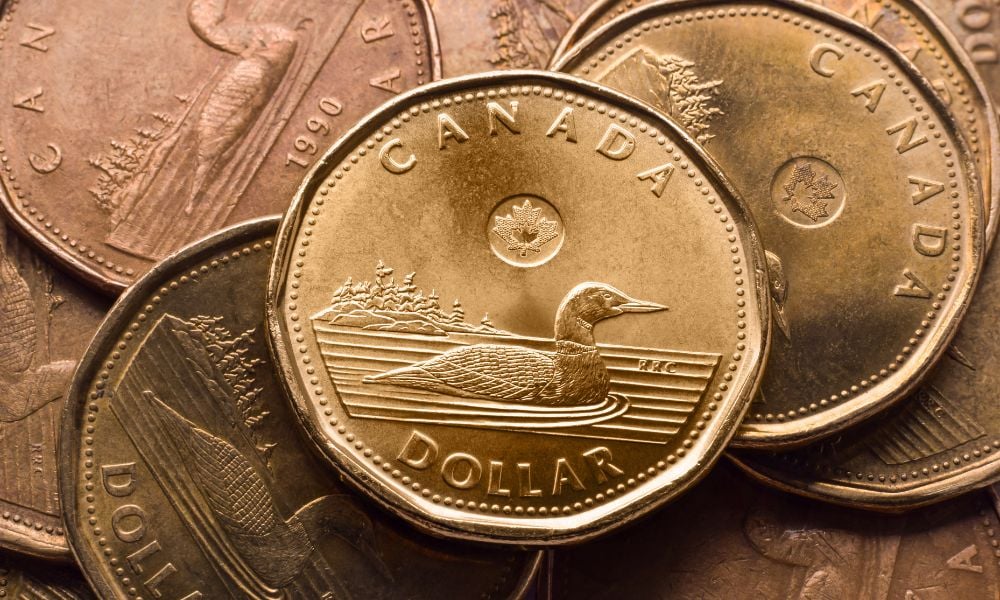
In a matter of days, markets flipped from pricing no US rate hike before March 2027 to betting on an 88 percent chance of one in September, and the Canadian dollar is paying for it.
The loonie fell to a 14-month low against the greenback on Friday, touching 1.4183 per US dollar, its weakest intraday level since April last year, according to Reuters.
The Financial Post reported the currency dropped to 70.56 cents US in mid-morning trading, well off its January high of 74.1 cents US, and now risks slipping below 70 cents US.
Driving the slide is a sharp repricing of US Federal Reserve policy.
The US dollar index rose 1.3 percent from Wednesday to Friday on expectations the Fed will lift rates from 3.5 percent to 3.75 percent sooner than markets had assumed.
As per the outlet, traders now bet on a 25 basis point hike as soon as the October 28 meeting, after fully pricing in no move before March 2027 ahead of Wednesday's decision.
That widens the gap with the Bank of Canada, which held its rate at 2.25 percent on June 10 for a fifth straight time, with most economists expecting steady policy for the rest of the year.
Higher US rates pull investors away from the loonie, and the greenback has also gained from its haven status.
"The Canadian dollar selloff this week has been particularly brutal," Shaun Osborne, Bank of Nova Scotia's chief currency strategist, said in a note reported by the Financial Post, citing a 1.2 percent gain for the greenback he called the "sharpest" since the loonie slumped in the spring.
Osborne sees the currency falling as low as 68.9 cents US near term before recovering to 75.2 cents US by year-end, with Scotiabank holding its call for Fed cuts late in the year as risks around the US-Iran conflict fade.
He said the US dollar's late-second-quarter gains were "driven by fundamentals" as markets repriced "a considerable amount of Fed tightening" following the June Federal Open Market Committee meeting.
Oil is adding to the pressure.
In a June 19 note cited by the Financial Post, Sarah Ying, head of currency strategy at CIBC Capital Markets' fixed income, commodity and currency unit, said the Middle East de-escalation and resulting sell-off could weaken the loonie.
She noted West Texas Intermediate has fallen 30 percent since mid-May and dragged the currency down with it.
Strong US fundamentals and a "hawkish Fed" could keep the Canadian dollar down, she said.
Reuters reported the US oil price has dropped about 9 percent since last Friday after Israel and Hezbollah agreed to a ceasefire.
Even so, a weaker loonie does not change the Bank of Canada's path, Bank of America said, according to Bloomberg.
The central bank will likely stay on hold through most of 2027 and let the currency absorb any Fed tightening.
"The economy is weak and the output gap is negative," said Carlos Capistran, head of Latin America and Canada economics at BofA Securities, on a webcast reported by Bloomberg.
That makes it hard to attribute inflation to demand pressures, he said.
Soft domestic demand reinforces that view.
Statistics Canada revealed Canadian core retail sales fell 0.7 percent in April for a second straight month.
"April's report suggests that inflation continued to support nominal retail sales, while underlying demand remained subdued," Maria Solovieva, an economist at TD Economics, said in a note cited by Reuters.