Buy Canadian procurement moves to the front of Canada's tariff response, reshaping the theme
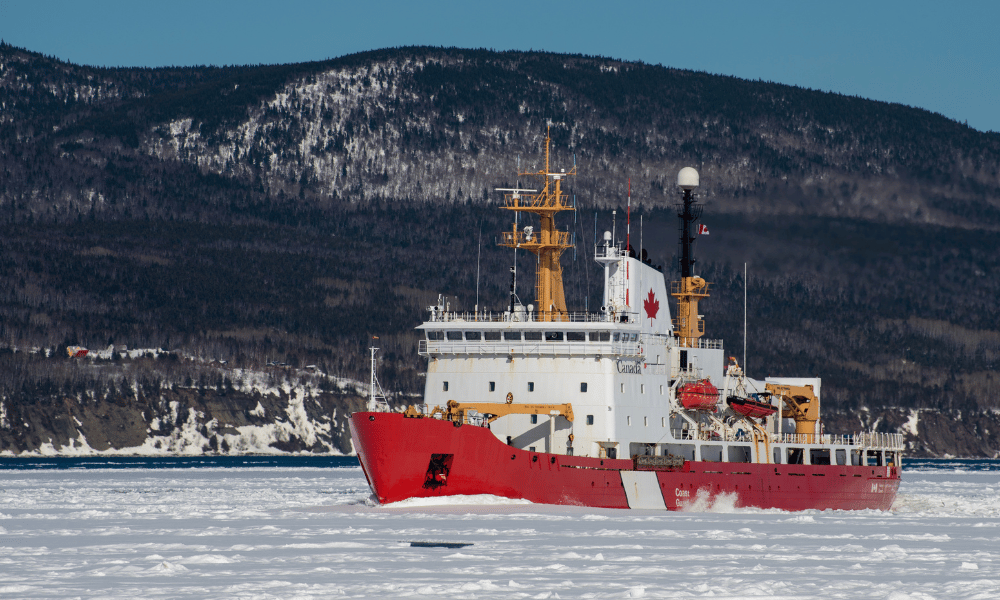
Chantier Davie Canada Inc. will build six program icebreakers for the Canadian Coast Guard under an $11.3bn fixed-price contract announced by Prime Minister Mark Carney.
It is the largest shipbuilding contract in Québec's history and directs federal spending to a domestic yard as US trade pressure continues.
All six Polar Class 3 vessels will be built at the Davie shipyard in Lévis, Québec.
The Prime Minister's Office said the program will create nearly 5,000 jobs in the construction phase alone and contribute nearly $650m annually to Canada's GDP, with the vessels built using Canadian steel and other domestic materials under the government's Buy Canadian Policy.
Davie said in its news release that construction of the first vessel begins in 2027, with all vessels delivered through the 2030s.
Carney set out a tighter sequence at the announcement, telling reporters that the first steel will be cut next fall, the first ship will be delivered five years later, and the full fleet will be in service five years after that, according to CBC News.
"Canada is now the best-connected economy in the world," Carney said in a statement released by his office. "These six state of the art icebreakers will keep the trade routes that carry Canadian goods to the world accessible and secure."
The timing carries weight for portfolio managers watching Canada's trade exposure.
Talks between Ottawa and Washington collapsed late on August 21, and 50 percent US duties took effect on roughly $20bn worth of Canadian products including dairy, alcoholic beverages, cement, and hockey equipment.
CNN reported that Canada will match those measures dollar for dollar, with retaliatory tariffs on steel, dairy, appliances, agricultural equipment, pulp, paper, and electronics scheduled for September 8.
He described the US move as a miscalculation at a news conference in Ottawa on August 22, telling reporters the United States asked too much and offered too little, according to NBC News.
Quebec Premier Christine Fréchette appeared alongside Carney at the shipyard, CBC News reported, saying the contract will protect the province's economic sovereignty and create careers for welders and technicians.
Fréchette is heading into a provincial election campaign.
For advisors, the direct equity play is limited.
Davie is privately held under the Inocea Group, as noted by Marine Insight in its August 3 coverage of the US icebreaker program, leaving no listed vehicle for exposure to the contract itself.
The broader defence build-out offers more accessible entry points.
Osler, Hoskin & Harcourt reported in a June 5 update that Canada reached the 2 percent NATO spending benchmark in March 2026 and has committed to the alliance's 5 percent of GDP pledge by 2035.
More than $14bn of 2025 to 2026 defence spending came from outside National Defence, weighted toward cybersecurity, space, and related procurement.
MoneySense reported in April that Canada spent $63.4bn on national defence in 2025, and that some analysts see cybersecurity, AI, and drone technology as the more investable segments of the theme.
Davie has held more than $7.74bn in federal contracts since 2012, according to the Prime Minister's Office, including a $19.6m design contract for these six vessels in 2024 and a $3.25bn contract in 2025 to build the Polar Max.
The Coast Guard fleet renewal under the National Shipbuilding Strategy is expected to deliver 88 vessels in total by 2045, CBC News reported.
Conservative defence critic James Bezan questioned the pace on X, writing that the deal was signed more than seven years after the project was announced and that it is hard to take government claims about unprecedented building speed seriously, The Canadian Press reported.