When volatility, concentration and CRM3 challenge traditional ETF approaches

Sticky inflation has proved more persistent than expected. Fiscal pressure is building, and geopolitical risk has returned to the foreground. For many portfolio managers, the shift is less about capturing upside and more about preserving it.
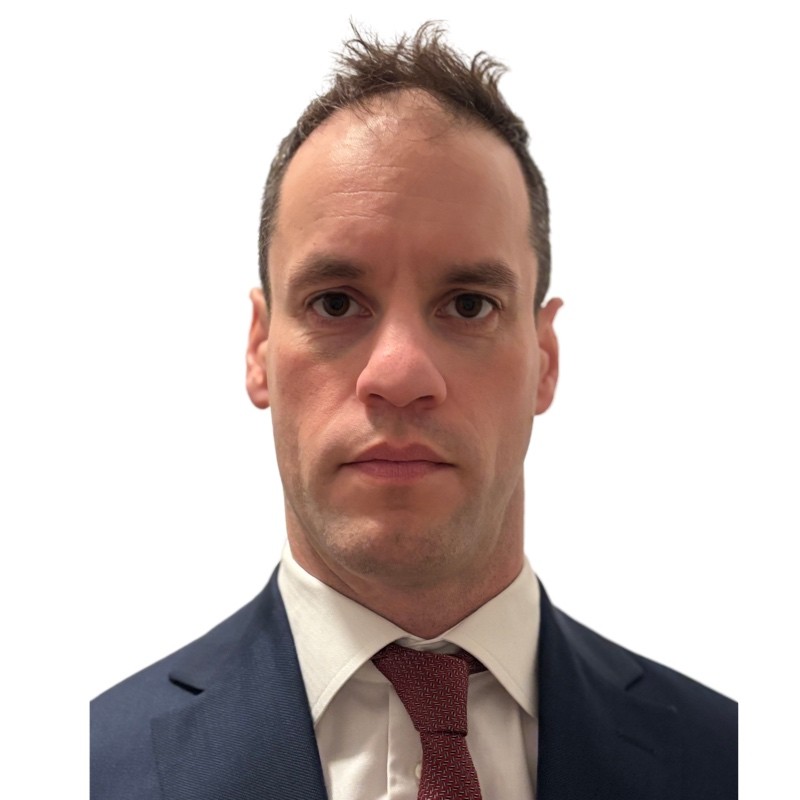 “Markets have become structurally more volatile. We see greater dispersion across sectors and securities,” says Jean-René Carle-Mossdorf, Head of ETF Development at Desjardins Investments, a leading Canadian investment fund manager and part of the Desjardins Group, one of Canada’s best-capitalized financial institutions with $510.2 billion in assets1. “In this environment, active ETFs have moved from a peripheral tool to more of a strategic portfolio component.”
Desjardins Global Asset Management (DGAM), Desjardins Group’s asset management arm, has spent years managing institutional mandates through active strategies. Desjardins Investments is now channeling that discipline into a growing ETF shelf, positioning actively managed ETFs as a complement to its established index lineup.
Flows suggest investors are adjusting, not retreating.
Canadian ETFs opened the year with exceptional momentum. Data from ETFGI Canada ETFs industry insights report from March 2026, shows ETFs in Canada recorded net inflows of $23.20 billion2 in March. Year‑to‑date, first quarter net inflows total $74.67 billion2. At the same point last year, net inflows stood at $36.14 billion2.
Beneath the headline numbers, the composition of flows is also shifting. Investors are still allocating to equities, but with greater attention to diversification across regions and exposures. The pattern reflects a more deliberate approach to portfolio construction, rather than broad risk-on positioning. Active ETFs combine that flexibility with the structural advantages that made ETFs dominant in the first place.
When diversification requires more than the index
For much of the past decade, broad exposure was often sufficient. Cap-weighted indices delivered strong returns, and concentration within them was rewarded rather than questioned.
“Concentration risk today is as much about indices as it is about individual securities,” said Carle-Mossdorf; “Passive ETFs remain highly effective for core exposure, but active ETFs allow advisors to manage those concentrations intentionally and apply judgment where fundamentals matter.”
Institutional portfolios have long operated with that distinction in mind. Exposure is not assumed to be neutral. It is something to be shaped, adjusted, and, where necessary, constrained.
That mindset is increasingly relevant for advisors. Core beta still plays a central role. But certain parts of the portfolio -- credit, sector allocations, income strategies -- are harder to leave entirely to index construction.
The shift is not away from passive investing. It is toward a more deliberate allocation of responsibility within the portfolio. “The stronger portfolios will actually combine both,” Carle-Mossdorf says.
Regulatory change is reinforcing that direction. CRM3 has elevated transparency requirements, sharpening how advisors articulate value to their clients. “That clarity encourages more deliberate portfolio design,” he says, “and active ETFs align well with this environment because their objectives, costs, and roles are easy to explain. Whether the goal is risk management, income, or alpha, within a highly efficient structure.”
For advisors weighing where to introduce active strategies, two segments stand out. Firstly, fixed income, especially credit, benefits from active oversight given the importance of duration management, issuer quality, and liquidity.
Secondly, select equity segments, particularly Canadian equities and dividend-focused strategies, also benefit due to market concentration and sector dynamics. “Advisors are expected to demonstrate value beyond just simple asset allocation,” Carle-Mossdorf says. “Active ETFs give them scalable, professionally managed tools that address real client needs: volatility control, income, and downside protection, while still allowing advisors to focus on planning, relationships, and the long-term outcomes expected by investors.”
Institutional roots, advisor-ready solutions
What underpins the Desjardins active ETF offering is the institutional pedigree of DGAM. “Our roots are firmly in the institutional space,” Carle-Mossdorf says. “They’re built on discipline, risk management, and a repeatable process. That heritage carries directly into our active ETFs. These strategies are not designed to chase markets, but to deliver consistent outcomes across numerous cycles, while still making institutional expertise more accessible to advisors.”
Portfolio managers at DGAM focus on implementation, risk management, and security selection, working from both bottom-up and top-down perspectives. Active ETFs give advisors access to professional portfolio management while still maintaining flexibility at the client level.
The firm is also expanding its active shelf, with three new active ETFs set to launch this year. “Our offering combines institutional-grade investment expertise with competitive pricing and long-term discipline,” Carle-Mossdorf says. “We’re working hard to bridge our active expertise into the ETF space and bring reliable, transparent, and advisor-friendly ETFs to the shelf.”
This article was produced in partnership with Desjardins Investments
1 Desjardins Group, Investor Relations – Fixed Income Investors – Credit Ratings, https://www.desjardins.com/ca/about-us/investor-relations/fixed-income-investors/credit-ratings/index.jsp. Data as of December 31, 2025.
2 Data for ETFs and ETPs listed in Canada, ETFGI Canada ETFs industry insights report March 2026
Desjardins Funds and Desjardins Exchange Traded Funds are not guaranteed. Their value fluctuates frequently, and their past performance is not indicative of their future returns. Commissions, trailing commissions, management fees and expenses all may be associated with mutual fund investments. Please read the prospectus before investing. Desjardins Global Asset Management Inc. is the portfolio manager of Desjardins Exchange Traded Funds. Desjardins Funds and Desjardins Exchange Traded Funds are offered by registered dealers.
This information is intended only for representatives who are duly registered with a securities regulatory authority. At no time should this information be shared with investors, including for the purposes of sales communications.
Desjardins®, all trademarks containing the word Desjardins, as well as related logos are trademarks of the Fédération des caisses Desjardins du Québec, used under licence.