Sapling CEO Rob Hong says relationship-driven growth, valuation gaps, and evolving deal structures are creating new opportunities across the US market
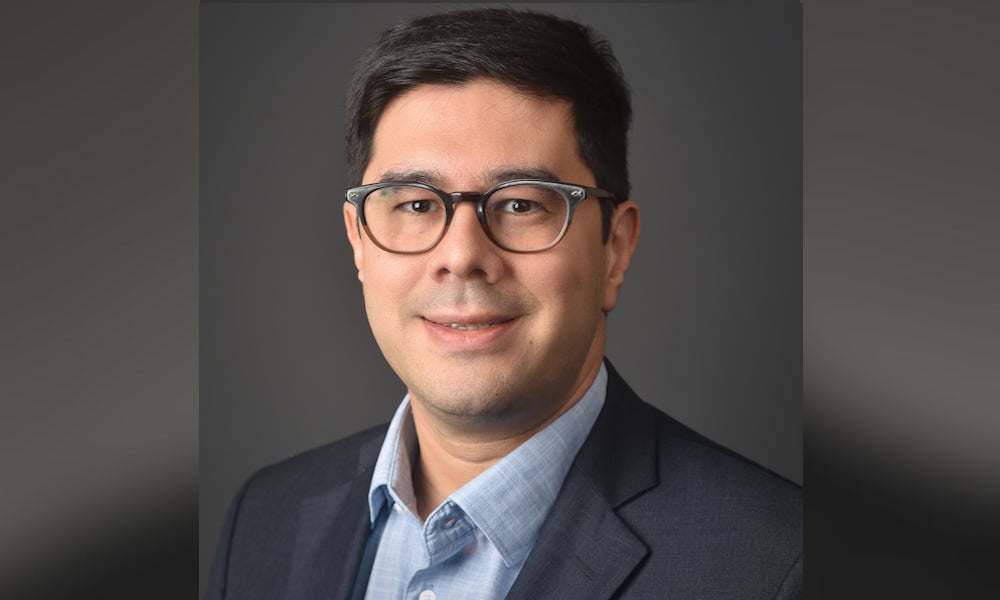
Canadian boutique financial advisory firm Sapling Financial Consultants is accelerating its US expansion, with CEO Rob Hong pointing to relationship-driven growth, underserved segments, and shifting private equity dynamics as key factors behind the firm’s move into New York.
With more than 75% of its client base already in the US, Hong told WP that the decision to establish a physical presence in the city reflects both strong momentum and clear limitations.
“We passed 50/50 US/Canada revenue 2 years into our ‘expansion’, which involved us attending conferences in the US,” Hong said. “While we have grown quickly, we feel we have done so with one arm tied behind our backs.”
He added that without a local footprint, the firm has been constrained in the most important aspect of winning business. “Without a physical presence in the US marketplace, we’re not able to compete on an equal footing in the area that is most important for winning business in our industry – relationships,” Hong said. “While the core is always great work, professional services are sold through relationship – which means going for lunches, seeing sports games together, etc.”
“If we have been this successful without a physical presence, how much more can we be if we have boots on the ground?”
Sapling is a financial modelling, due diligence and data analytics firm that combines technological innovation with financial comprehension. It works with private equity firms, CFOs, entrepreneurs and business owners, investment banks, and others. Based in Toronto, it open its first US satellite office in Atlanta, Georgia, in 2025.
Finding opportunity in a crowded market
New York was not always an obvious choice. Hong said the firm initially avoided the market due to concerns it was overserved.
“For NY specifically, originally we had stayed away, thinking that the market would be overserved,” he said. “That all changed when we closed a number of important private equity clients in a short time, with big appetites for our services.”
Spending more time in the city revealed a gap in the lower mid-market. “While there are lots of providers, they are Big Apple-sized in terms of budgets, and the lower midmarket firms we serve struggle to afford these services and to get the attention of the ‘A’ team in bigger firms,” Hong said. “That’s the market gap that we see.”
Hong noted that while cross-border deals are often highlighted, most of Sapling’s work remains domestic within the US. But that said, cross-border activity has evolved.
“There was always a large element of Canadian PE firms buying US portfolio companies,” Hong said, particularly in sectors like healthcare. “We have seen Canadian portcos of Canadian private equity firms sell to US private equity firms. We’ve also seen more on-the-ground presence from US sponsors, with firms like Trivest (Miami-HQ) building out small teams in Canada to find deals.”
Valuation differences continue to attract US buyers. “Americans are attracted to Canada because we have less private equity capital overall, and hence lower valuation multiples on our companies,” Hong said. “We also tend to be a bit further behind on some of the leading-edge ideas.”
Persistent gaps in financial preparation
For advisors working with business owners, Hong sees consistent shortcomings in financial modelling and due diligence.
“For financial modelling, there are always lots of poorly constructed models – errors, too much or too little complexity, lack of fit between model drivers and actual drivers of performance,” he said. “But the deeper problem is overly optimistic assumptions, and then poor hygiene in variance analysis… which feeds into better assumptions on the next turn.”
On the diligence side, foundational issues remain common. “For due diligence, poor accounting is at the top,” Hong said. “Having no accounting system, or having an outdated system, makes diligence tough.”
Even when systems are in place, methodology can distort performance. “Having only cash accounting and not accrual accounting… can obscure the true profitability of the business.”
In a volatile macro environment, Hong said deal structures are becoming more flexible.
“There is definitely more creativity in deal structuring when buyers and sellers have a gap in valuation expectations,” he said.
Earn-outs are increasingly being used to bridge that gap. “A lot of transactions include a large earn-out component, whereby the cash payment is deferred and contingent upon hitting certain performance milestones,” Hong said. “This allows both parties to (potentially) get what they want while saving face.”
Despite ongoing uncertainty, valuations have held steady. “Valuations in the lower midmarket appear to be broadly steady since 2020,” he said.
This has created an unusual dynamic. “With valuations not moving much… when uncertainty is higher, buyers want a discount but sellers don’t want to give it, so deals don’t happen. When uncertainty recedes, deals happen. The price throughout is the same.”
While Sapling is expanding geographically, Hong said service delivery remains largely remote for now.
“For now, not much,” he said when asked how local offices change client support. “We are not currently hiring for consulting roles in either of those two markets, and most of our work is delivered remotely.”
However, proximity still plays a role in relationship-building. “It does mean we have a business development/relationship management person on site for key client meetings,” Hong said, noting that consulting staff can be flown in as needed.
Common errors in deals
As more companies prepare for exits or capital raises, Hong highlighted common errors that can derail deals.
“One of them is having poor accounting going into a transaction,” he said. “If you think the EBITDA of your business is $3M… but the EBITDA is really $1.5M… that can bust a deal – and the trust on both sides – very quickly.”
Preparation is critical. “Having a quality of earnings report done, or at least a review or audit engagement, can go a long way,” Hong said.
He also warned against relying on a single buyer. “Another is having an unbrokered process,” he said. “It sounds nice to be on close terms with a single buyer, but then how do you know you’re not being taken advantage of?”
“Having a professionally run, competitive process will ensure you get the best price and also maximize your chances of finding a buyer who will have alignment in terms of values.”
Data as a differentiator
With demand for analytics growing, Hong said advisors can add value by integrating more sophisticated insights into client conversations.
“Having dashboards that show operational key performance indicators (KPIs) in (near) real time can be a big selling feature that can help lift multiples,” he said, citing examples across industries.
“Not only does this mean better visibility, but if it is used, it means better profitability, and the opportunity to make some big, performance-enhancing changes post-close.”
For investment advisors, differentiation comes down to demonstrating results. “Baseline is good data on holdings and performance,” Hong said. “But what can really differentiate you is being able to show how the specific implementation of your strategy generated more return for less risk – alpha.”
“If you can get that in real time, with each client having access to that for their own investments, that can be a large differentiator (assuming the alpha is there!)”